 If you’re a new parent, baby wipes quickly become one of those things you use constantly — and not just for diaper changes.
They’re used for hands, faces, high chairs, pacifiers, toys, car seats, and quick cleanups when you’re out of the house. Which means wipes touch your baby’s skin all day long.
So it makes sense to wonder: what’s actually in baby wipes — and does it matter?
Why baby wipes deserve more attention than most parents expect
Baby wipes are one of the most frequently used products in early parenthood. Unlike soap, they’re often left on the skin — not rinsed off.
That means ingredients can stick around on hands, cheeks, and the mouth area, sometimes dozens of times a day.
There’s also a big range in wipe formulas. A review in Pediatric Dermatology notes that baby wipes are used repeatedly (including on hands and face), and that products differ in ingredients, manufacturing, and tolerability — which is why ingredient selection matters for minimizing irritation. Source: Pediatric Dermatology review (PMC)
The real-life wipe moment every parent recognizes
If you’ve ever wiped your baby’s hands, watched them immediately put those hands in their mouth, and thought, “Wait… what’s on this wipe?” — you’re not alone.
Most parents don’t think much about wipes until they’re suddenly using them constantly. At that point, ingredient lists start to matter a lot more.
“Chemical-free” vs “non-toxic”: what parents usually mean
No product is literally chemical-free. When parents say “chemical-free wipes,” they usually mean wipes without harsh or unnecessary ingredients — especially added fragrance and ingredients that are more likely to irritate sensitive baby skin.
If you want the simplest rule: fragrance-free, minimal ingredients, and gentle enough for repeated daily use.
Ingredients to watch for in baby wipes
You don’t need to memorize every ingredient on earth. But if you want to be picky (in the best way), these are common ones that many parents choose to avoid — especially for newborns or sensitive skin.
- Fragrance — Fragrance formulas can be complex mixtures, and manufacturers may list them simply as “fragrance” rather than disclosing individual components. Source: FDA on fragrances in cosmetics Source: FDA on trade secret ingredients
- Phthalates — These may show up in connection with fragranced products. Some phthalates are suspected endocrine disruptors, and toxicology profiles summarize exposure pathways and health concerns. Source: EPA phthalates overview (PDF) Source: ATSDR toxicological profile (PDF)
- Parabens — Parabens are preservatives used in some personal care products. If you prefer to avoid them in baby wipes, look for ingredients ending in “-paraben.” Source: FDA on parabens Source: HealthyChildren.org guidance
- Phenoxyethanol — A preservative used to limit microbial growth in many products. Some families with very sensitive skin choose to avoid it. Source: NIH PubChem Source: Pediatric Dermatology review (PMC)
- Cocamidopropyl betaine — A surfactant that can be associated with contact allergy in some people. Source: Contact Allergen of the Year (journal)
- Propylene glycol — Used in many personal care products; some sensitive-skin families prefer to avoid it. Source: NIH PubChem
- 1,4-dioxane — This can occur as a byproduct in some manufacturing processes and is not typically listed as an ingredient on labels. Source: California DTSC profile (PDF) Source: EPA nontechnical summary (PDF)
Why fragrance-free matters so much for wipes
Fragrance-free is one of the easiest upgrades you can make, because fragrance can be listed as a single term on labels even when it represents many ingredients. Source: FDA on fragrance labeling
If your baby has eczema, very sensitive skin, or you’re using wipes constantly on hands and face, fragrance-free is usually the safer bet.
When wipes are enough — and when you might want something else
For everyday messes, wipes are usually all you need. Sticky fingers, snack crumbs, quick cleanups — done.
But there are moments when parents want a more thorough clean, like after diaper blowouts, when wipes are used on toys and pacifiers, during illness, or after being out in public.
If you’re cleaning gunk off toys, you can mostly get away with a quick rinse or wipe. But if you’re concerned about germs, stick with a non-toxic disinfectant that doesn’t require rinsing.
That’s why many families pair simple, fragrance-free wipes with a baby-safe no-rinse cleaner for toys and high-touch surfaces. If you’re in that camp, start with chemical-free cleaning products for baby toys and top non-toxic baby registry products first-time parents actually use.
For parents looking for a non-toxic disinfectant that’s safe to use on baby spaces, options are extremely limited. In fact, Force of Nature is currently the only EPA-registered disinfectant made without harsh chemical fumes or residues, and it does not require rinsing after use.
Where Force of Nature fits in for baby cleanups
Baby wipes are great for quick, everyday messes — hands, faces, high chairs, and on-the-go cleanups. But there are times when wipes aren’t quite enough, like after diaper blowouts, when toys or pacifiers hit the floor, during illness, or after being out in public.
In those moments, many parents want something that actually disinfects without introducing harsh chemical fumes or residues into their baby’s environment.
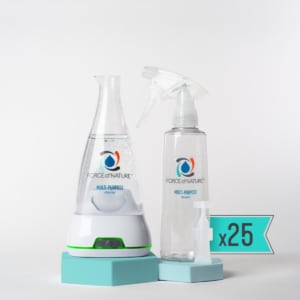
Force of Nature is a non-toxic disinfectant made by combining salt, water, and vinegar to create hypochlorous acid, a substance your own immune system already produces to fight germs. When used as directed, it’s EPA-registered to kill 99.9% of viruses and bacteria, and it doesn’t require rinsing after use.
That combination — real disinfecting power without bleach, ammonia, quats, or added fragrance — is why many families use Force of Nature for baby toys, high chairs, changing tables, and other high-touch baby surfaces.
If you’re building a registry or simplifying your routine, you can also see how parents use it in top non-toxic baby registry products first-time parents actually use or specifically for cleaning baby toys safely.
Quick checklist: how to choose wipes you’ll feel good using
- Choose fragrance-free
- Look for a short ingredient list
- Avoid ingredients your baby reacts to, especially if you’re seeing redness or dryness
- Pick wipes you’d feel comfortable using on hands and faces, not just diaper changes
If you want to go deeper on what “chemical-free” means across baby products, you can also browse your ingredient guides from fragrance to phthalates.