 If you’ve ever cleaned your home and immediately noticed coughing, sneezing or irritation, you’re not imagining it. For many families, cleaning itself can be a trigger—especially when products release fumes, contain fragrance or leave behind harmful residues.
The good news is that you don’t need to stop cleaning or turn your routine upside down. A few simple changes in how you clean—and what you use—can help reduce exposure while still keeping your home truly clean.
If you’re still figuring out which products to use, this guide to asthma- and allergy-safe cleaning products is a helpful place to start. Below, we’ll focus on the practical part: how to actually clean in a way that helps minimize triggers.
Start With the Products You Use Most Often
You don’t have to overhaul every product in your house at once. Start with the cleaners you reach for all the time—like kitchen sprays, bathroom cleaners and disinfectants. Those are usually the easiest place to make a meaningful difference.
Many conventional cleaners contain ingredients that can irritate the lungs or skin, including disinfectants like bleach and quats, as well as added fragrance.
If you’re not sure what’s in your current products, it can help to understand how ingredients like quats (quaternary ammonium compounds), fragrance and phthalates are commonly used—and why some families with asthma and allergies choose to limit them.
Avoid Sprays and Aerosols When Possible
Sprays and aerosols can make it easier to inhale cleaning products, especially in smaller or poorly ventilated spaces.
Instead of spraying a product into the air around you, try spraying directly onto a cloth when appropriate or avoiding aerosol products altogether. It’s a small change, but it can reduce how much of the product becomes airborne while you clean.
Be Mindful of What’s in Your Disinfectant
Disinfecting is an important part of reducing germ exposure, especially on high-touch surfaces, when illness is going around or anytime your household wants that extra level of germ protection.
The key is choosing a disinfectant that doesn’t add unnecessary exposure to harmful fumes, added fragrance or other ingredients that may be problematic for asthma- or allergy-sensitive households.
Traditional disinfecting ingredients like bleach and quaternary ammonium compounds (quats) kill germs effectively, but they can also contribute to respiratory irritation with frequent exposure. If you use disinfectants regularly, it’s worth understanding what bleach is and how it works in cleaning products and how it compares with other disinfecting options.
Focus on High-Touch Areas
Here’s some good news: you do not have to clean every square inch of your house every day.
When you’re trying to reduce germ exposure, focus your efforts where they matter most—high-touch areas like countertops, door handles, light switches, faucets and bathroom surfaces.
Prioritizing the places everyone touches most often can help you keep your home clean without turning cleaning into an all-day project.
Keep Your Routine Simple
Using a different product for every cleaning job can mean more formulas, more ingredients and more bottles to keep track of.
Simplifying your routine by using fewer products across more surfaces can make a big difference—especially if you clean frequently. And honestly, one bottle that can handle most of the house is a beautiful thing.
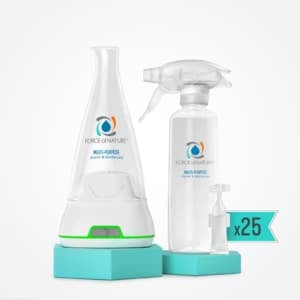
Force of Nature is a small appliance that converts tap water plus a capsule of salt, water and vinegar into a multi-purpose cleaner, deodorizer and EPA-registered disinfectant. It kills 99.9% of germs when used as directed and lets you clean and disinfect without switching between multiple products.
Reduce Harmful Residues on Surfaces
Some cleaning products leave behind residues after you’re finished cleaning. For families with asthma, allergies or sensitive skin, reducing exposure to harmful residues can be an important part of choosing and using cleaning products.
Look for products that don’t leave harmful residues behind or require rinsing after use. If a product does leave residue, wiping the surface with a damp cloth after cleaning may help reduce what remains.
Pay Attention to Ventilation
Airflow matters, especially when you’re cleaning with products that release fumes or particles into the air.
Open a window when you can, turn on the bathroom or kitchen fan, or keep the door open while you clean. Nothing fancy—just give the air somewhere to go.
Don’t Forget About Laundry
Bedding, towels and clothing can hold onto allergens like dust mites, pet dander and pollen—which have an impressive ability to hitch a ride into your house on clothes, bags and pretty much everything else your family drags through the door.
At the same time, laundry products can introduce their own potential triggers. Many contain fragrance or leave behind residues that may irritate sensitive skin or airways.
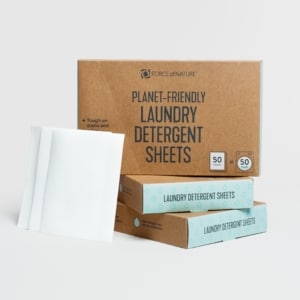
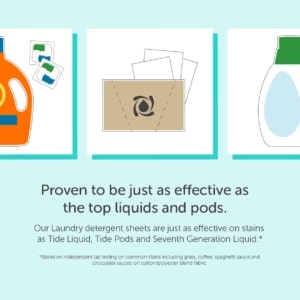
Choosing fragrance-free laundry products can help reduce that additional exposure. Force of Nature Laundry Detergent Sheets are fragrance-free and designed to clean effectively without dyes or unnecessary additives.
If stubborn odors are also an issue, this guide explains what can cause laundry odor and buildup and how to deal with it.
Stay on Top of Mold and Mildew
Mold and mildew are common triggers for both asthma and allergies, especially in damp places like bathrooms, kitchens and around windows.
Pay attention to areas where moisture builds up—tile, grout, shower walls, window sills and other damp surfaces—and clean them regularly so mold and mildew don’t get a chance to settle in.
Humidifiers deserve some attention too. They can be helpful for some people, but they need to be cleaned regularly. If they aren’t maintained properly, they can contribute to mold and bacteria growth instead of helping. The Mayo Clinic notes that proper humidifier care is important to avoid worsening symptoms.
Force of Nature is a small appliance that converts tap water plus a capsule of salt, water and vinegar into a multi-purpose cleaner, deodorizer and EPA-registered disinfectant. It kills 99.9% of germs, mold and mildew when used as directed and can be used on many of the surfaces where mold and mildew tend to develop.
Think of Cleaning as Part of Your Overall Exposure
Cleaning is just one part of your home environment, but it’s one you have a lot of control over.
You don’t need a perfectly clean house or a complicated routine. Small changes in the products you use, how you apply them and where you focus your effort can help reduce the things your family is breathing in and touching every day.
If you’re trying to reduce triggers more broadly, this guide to reducing asthma triggers at home goes deeper into how cleaning fits into the bigger picture.
Learn More
If you’re deciding what to use, start with our guide to allergy- and asthma-safe cleaning products, which explains what to look for and what to avoid. For more specific recommendations, see our guide to the best cleaning products for asthma and allergies.
To understand the broader health context, read about cleaning product health risks. And if you’re trying to figure out what a particular ingredient does, our cleaning product ingredient glossary breaks them down one by one.