If you’ve ever picked up a cleaning product labeled “natural” and thought…okay, but what does that actually mean?—you’re not alone.
The tricky part is that “natural” isn’t a regulated term. That means it can show up on products that still contain ingredients you might want to avoid—especially if you’re trying to create a safer home for your family.
In this guide, we’ll break down what “natural cleaning products” really mean, how to avoid greenwashing, and what to look for instead so you can feel confident about what you’re using every day.
What Are “Natural” Cleaning Products, Really?
“Natural” sounds reassuring, but in cleaning products, it doesn’t have a strict definition.
A product labeled “natural” might:
- Contain some plant-based ingredients
- Still include synthetic preservatives, fragrances, or phthalates
- Use vague marketing terms without full ingredient transparency
That’s why two products sitting next to each other—both labeled “natural”—can be very different when you look closely.
Why “Natural” Doesn’t Always Mean Safe
It’s easy to assume that “natural” = non-toxic, but that’s not always the case.
Some ingredients found in products marketed as “natural” can still:
- Irritate skin or trigger allergies or asthma
- Release strong fumes that can irritate sensitive respiratory systems
- Leave residues you may not want on frequently touched surfaces
If you’re cleaning areas your kids touch every day—like floors, high chairs, and toys—those details start to matter a lot more.
If your main concern is safety around kids and babies, you might also want to read how to choose cleaning products safe enough to use around your kids.
And if you’re trying to choose products based on more than the word “natural,” our guide to the best non-toxic cleaning products breaks down what to look for instead.
Common Ingredients to Watch For (Even in “Natural” Products)
Instead of focusing only on labels, it helps to know which ingredients tend to show up in products that aren’t as gentle as they seem.
Fragrance (or “Parfum”)
The word “fragrance” on a label might sound like a single ingredient, but it can actually represent a mixture of many different chemicals. Companies aren’t always required to disclose every ingredient inside that mixture, which can make it hard to know exactly what you’re being exposed to.
Fragrance can also contain ingredients some families prefer to avoid, especially if asthma, allergies, migraines, or skin sensitivities are part of the picture.
Learn more in What Fragrance Really Means in Cleaning Products.
Preservatives Like Methylisothiazolinone (MIT) & Methylchloroisothiazolinone (CMIT)
These preservatives are often used to prevent bacteria growth in products—even in some products marketed as “natural.” They can be a concern for people with allergies or sensitive skin, particularly with repeated exposure.
If you want to dig deeper, our guide to methylisothiazolinone in cleaning products explains what it is and why some families choose to avoid it.
Dyes
Dyes are another example of ingredients that don’t improve cleaning performance. They’re often added simply to make a product look more appealing, but they can introduce an unnecessary ingredient for people concerned about skin or respiratory sensitivities.
Disinfectants Like Thymol, Quats & Bleach
Some disinfecting ingredients—including thymol, quaternary ammonium compounds (quats), and bleach—are effective at killing germs, but they may not be the right fit for every household. Some families prefer to avoid ingredients that can contribute to respiratory irritation, skin sensitivity, strong fumes, or residues, particularly with repeated indoor use.
If you need germ-killing performance but want to avoid bleach or quats, our guide to how to choose a non-toxic disinfectant that actually kills germs explains what to look for.
Other Surfactants and Solvents
Surfactants and solvents can be useful cleaning ingredients, but they vary widely in how they work and how gentle they are. Instead of assuming an ingredient is good or bad simply because of its category, look at the full formula and what the product is designed to do.
If you want a deeper dive, see Top Ingredients to Avoid in Cleaning Products for a Safer Home.
How to Avoid Being Misled by “Natural” Labels
Here’s a simple way to cut through the noise when you’re shopping:
Do This: Look for full ingredient transparency
Not That: Trust vague claims like “plant-based” or “green”
Do This: Choose products with proven effectiveness
Not That: Assume “natural” means it actually works
Do This: Look at what the ingredients actually do
Not That: Judge a formula by whether the ingredient names sound familiar
These small shifts can make a big difference in helping you choose products that are both safer and effective.
What to Look For Instead
Instead of relying on the word “natural,” here are a few things that can help guide your decision:
- Clear, complete ingredient information
- Products designed to minimize unnecessary fumes or residues
- Solutions that balance safety and cleaning performance
- Products without fragrance or dyes
- Independent testing or credible third-party certifications
- EPA registration if the product claims to disinfect
Because at the end of the day, a product needs to do more than sound good on the front of the bottle—it needs to actually do the job you bought it for.
Can Natural Cleaning Products Really Disinfect?
Some can—but plenty of products marketed as “natural” are cleaners, not disinfectants.
In the U.S., a product making disinfecting claims must be EPA-registered and have specific germ-kill claims. So if killing germs is important to you, don’t rely on words like “natural,” “green,” or “plant-based” alone. Check the label to make sure the product is actually registered to disinfect.
One option is hypochlorous acid, or HOCl, a disinfecting ingredient used in EPA-registered disinfectants and at varying concentrations in wound, eye, and skin-care products.
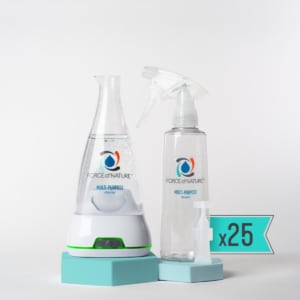
Force of Nature uses electrolyzed water technology to create hypochlorous acid and is an EPA-registered disinfectant that kills 99.9% of germs when used as directed. It’s made without bleach, quats, ammonia, fragrance, dyes, surfactants, or preservatives.
If you’re curious about the science, you can learn more about what hypochlorous acid is and how electrolyzed water works to see how Force of Nature creates it at home.
The Bottom Line
Choosing natural cleaning products isn’t just about trusting what’s on the front of the label.
It’s about understanding what’s inside, knowing what to look for, and finding products that balance safety and performance.
Once you know what to watch for, it becomes a lot easier to cut through the marketing—and choose what actually works for your home and your family.