If you’ve ever wondered whether cleaning products could affect your baby, you’re not overthinking it.
Babies experience the world very differently than adults. They crawl on floors, put their hands (and everything else) in their mouths, and spend more time close to surfaces where cleaning products are used.
That means everyday exposure—through the air, skin contact, and surfaces—can add up in ways that matter more for babies than for the rest of us. Many of these exposures are part of broader cleaning product health risks that can affect your home over time.
In this guide, we break down how cleaning chemicals can affect babies and simple ways to reduce exposure so you can create a healthier home environment.
Why Babies Are More Vulnerable to Cleaning Chemicals
Babies aren’t just smaller adults—their bodies are still developing, which can make them more sensitive to certain exposures.
- They crawl and play on the floor, where residues from cleaning products can linger
- They frequently put their hands and objects in their mouths, increasing ingestion exposure
- Their lungs and immune systems are still developing, which can make them more sensitive to fumes and airborne irritants
Because of this, the same product that feels fine for adults may affect babies differently—especially with repeated, everyday use.
Common Sources of Exposure in the Home
Cleaning chemicals don’t just stay in the bottle—they can show up in a few key ways around your home:
- Airborne exposure: Sprays, disinfectants, and air fresheners can release fumes that linger in the air
- Surface residues: Floors, toys, and countertops can retain cleaning product residue after use
- Skin contact: Babies come into direct contact with surfaces throughout the day
These exposures are usually small on their own, but over time—especially with frequent cleaning—they can add up.
What the Research Says About Cleaning Products and Kids
Research links frequent exposure to certain cleaning products to respiratory issues in children, including asthma and wheezing.
For example, one study found that young children frequently exposed to cleaning products can be up to 50% more likely to develop asthma. Another study found that exposure to cleaning chemicals in early life—especially within the first three months—was associated with an increased risk of asthma by age 3.
Additional research has shown that children with higher exposure to cleaning products were more likely to develop chronic wheezing and allergies compared to those with lower exposure.
This doesn’t mean every cleaning product is harmful—but it does highlight the importance of paying attention to how often products are used, what ingredients they contain, and how exposure happens in daily life.
Ingredients like added fragrance, dyes, preservatives, bleach, quaternary ammonium compounds (quats) and certain surfactants are often the ones associated with irritation or sensitivity.
To better understand common ingredients to watch for, see Top Ingredients To Avoid In Cleaning Products for a Safer Home.
Where Exposure Happens Most
If you’re trying to reduce exposure, it helps to focus on the areas your baby interacts with the most:
- Floors (especially for crawling babies)
- Toys and teethers
- High chairs and feeding surfaces
- Hands and frequently touched objects
These are the places where residues and repeated contact matter the most.
How to Reduce Your Baby’s Exposure to Cleaning Chemicals
You don’t need to overhaul everything at once. A few simple shifts can make a meaningful difference:
- Skip fragranced cleaners, deodorizers, and air fresheners, which can contribute to airborne exposure
- Avoid disinfectants like bleach, quats and thymol
- Choose products that don’t leave harmful residues, especially for high-touch surfaces
- Use cleaning products designed for frequent, everyday use
If you’re trying to choose safer products for everyday cleaning, our guide to the best non-toxic cleaning products breaks down what to look for. And when you need germ-killing performance, our guide to how to choose a non-toxic disinfectant that actually works explains what matters most.
If you want more kid-specific guidance, see Cleaning Products Safe for Kids: What to Use (and What to Avoid).
A Safer Way to Clean Around Babies
For many families, the goal is finding something that works well but doesn’t add unnecessary exposure.
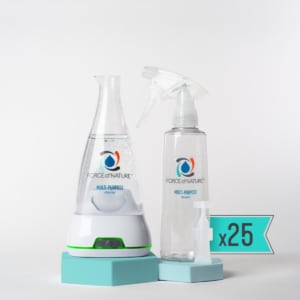
One option is hypochlorous acid, a disinfecting ingredient made from salt, water and vinegar. Hypochlorous acid is an antimicrobial that’s common in wound and eye care products because it’s so gentle and effective at killing germs. Force of Nature is a small appliance that creates hypochlorous acid from salt, water and vinegar. It cleans, deodorizes and kills 99.9% of germs.
If you’re curious about the science—but not in the mood for a chemistry lecture—our guide to what hypochlorous acid is explains why HOCl works so well, and our guide to how electrolyzed water works shows how Force of Nature makes it fresh on your countertop.
The Bottom Line
Cleaning is an important part of keeping your home healthy—but the products you use and how you use them matter.
By understanding how exposure happens and making a few intentional choices, you can reduce your baby’s exposure to unnecessary chemicals while still keeping your home clean.