If someone in your house gets itchy, rashy or mysteriously irritated after putting on freshly washed clothes, it’s reasonable to wonder: Could it be the laundry detergent?
Maybe it’s your child complaining that their pajamas itch. Maybe your baby suddenly has angry-looking patches where their clothes touch their skin. Or maybe it’s you, standing in the laundry room staring suspiciously at a detergent bottle you’ve used for years.
Laundry detergent can irritate skin or trigger an allergic reaction in some people—and ingredients like fragrance and certain preservatives are especially worth paying attention to if your family deals with eczema, allergies or sensitive skin.
But before we blame the detergent for every mysterious rash in the house, it helps to understand what a true laundry detergent allergy is, what symptoms can look like and how to choose a formula that’s a better fit for sensitive skin.
What Is a Laundry Detergent Allergy?
When people say they’re “allergic to laundry detergent,” they’re often talking about a type of skin reaction called contact dermatitis.
There are actually two main kinds:
- Allergic contact dermatitis happens when your immune system reacts to an ingredient you’ve become sensitized to.
- Irritant contact dermatitis isn’t an allergy. It happens when something irritates or damages the skin’s protective barrier.
Detergents can be skin irritants, while certain detergent ingredients can also be allergens. And because allergic and irritant contact dermatitis can look very similar, it isn’t always obvious which one you’re dealing with.
The American Academy of Dermatology explains the difference between allergic and irritant contact dermatitis, and if a reaction keeps coming back, a dermatologist can help identify the actual trigger.
What Does a Laundry Detergent Allergy Look Like?
A reaction to laundry detergent may show up on areas of skin that spend a lot of time against freshly washed clothes, towels or bedding.
Symptoms of contact dermatitis can include:
- Itching
- Redness or inflammation
- A rash
- Dry, cracked or scaly skin
- Swelling
- Burning, stinging or tenderness
- In some cases, bumps or blisters
It can be especially confusing because those symptoms overlap with eczema and plenty of other skin conditions. Contact dermatitis can also aggravate skin that’s already eczema-prone.
If you’re noticing a pattern—say, itching after putting on clean pajamas, using freshly washed towels or sleeping on freshly laundered sheets—that’s useful information to share with your healthcare provider.
If a rash is severe, widespread, painful, involves the face or eyes, shows signs of infection, or just isn’t getting better, it’s a good idea to check in with a medical professional rather than playing laundry-room detective indefinitely.
Can You Suddenly Become Allergic to Laundry Detergent?
Yes, it’s possible to develop an allergic reaction to an ingredient even if you’ve encountered it before without a problem.
Allergic contact dermatitis happens after your immune system becomes sensitized to a particular allergen. That means something you’ve used many times in the past can potentially become a problem later.
But a new rash doesn’t automatically mean you’ve developed an allergy to your detergent. A formula could have changed, you may be reacting to something else entirely, or your skin barrier may simply be more irritated than usual.
This is one of those situations where “But we’ve used this forever!” unfortunately doesn’t completely solve the mystery.
Which Laundry Detergent Ingredients Can Trigger Allergies or Irritation?
There isn’t one ingredient that causes every detergent reaction. But there are a few categories that are especially useful to know about if your family has eczema, allergies or sensitive skin.
Fragrance
Fragrance is one of the first things we’d look at.
Fragrance is a well-established cause of allergic contact dermatitis, and a study examining common allergens in popular textile-care products found that fragrance and essential oils were the most commonly identified allergens in laundry detergents.
If fragrance is a concern, look for fragrance-free rather than simply assuming “unscented” means the same thing.
And yes, this applies to “natural fragrance” and essential oils too. Something coming from a plant doesn’t automatically make it incapable of triggering an allergy. Poison ivy would like a word.
If you want to go deeper on what that one little word on an ingredient label can mean, our guide to what “fragrance” really means in cleaning products explains why fragrance can be particularly tricky for allergy- and sensitivity-prone families.
Preservatives Like MIT, CMIT and BIT
Preservatives help keep water-based products from growing bacteria, mold and other microbes. Important job! Unfortunately, some preservatives are also recognized contact allergens.
Three names worth knowing are:
The links above go to EWG’s consumer ingredient guides if you want to dig into each one. From a medical standpoint, the isothiazolinone family is well recognized for its potential to cause allergic contact dermatitis, and these preservatives have been identified in household detergents and laundry products.
In fact, the National Eczema Association specifically excludes methylisothiazolinone and methylchloroisothiazolinone from products that earn its Seal of Acceptance because they are on its list of known allergens and irritants for people with eczema and sensitive skin.
This does not mean everybody is going to react to an isothiazolinone. But if you already know someone in your family is sensitive—or you’re deliberately choosing products for eczema or allergy-prone skin—they’re useful ingredient names to recognize.
Dyes
Dyes don’t make your clothes cleaner. They’re there to change the appearance of the detergent.
For families trying to simplify what touches sensitive skin all day, choosing a dye-free detergent is an easy place to start.
What About “Hypoallergenic” Laundry Detergent?
We wouldn’t choose a detergent based on that word alone. There is no standardized regulatory definition of “hypoallergenic”.
Instead, look for specifics:
- Is it fragrance-free?
- Is it dye-free?
- Does the company clearly disclose what’s in the formula?
- Does it avoid ingredients you already know your family is sensitive to?
- Has it earned an independent sensitive-skin certification?
That last one can be particularly useful because it gives you something more meaningful than a reassuring word on the front of the box.
If you want a broader guide to evaluating detergent claims and ingredients, our guide to choosing a non-toxic laundry detergent breaks down labels like “non-toxic,” “fragrance-free,” “Free & Clear” and “natural.”
What Is the Best Laundry Detergent for Sensitive Skin and Eczema?
There isn’t one detergent that’s automatically best for every person with sensitive skin. But there are some very useful things to look for.
We’d prioritize:
- Fragrance-free
- Dye-free
- No known allergens you personally need to avoid
- Clear ingredient information
- Independent safety testing or sensitive-skin certification
- Strong enough cleaning performance that you’re not adding extra detergent hoping your clothes will come out clean
One credential that carries real weight here is the National Eczema Association Seal of Acceptance.
To earn the Seal, a product must be fragrance-free, cannot contain ingredients on the NEA’s Ecz-clusion List of known allergens and irritants, must undergo acceptable clinical safety testing for sensitivity, irritation and toxicity, and is reviewed by an independent panel of dermatologists, allergists and eczema experts.
And importantly, the Seal isn’t only relevant to people with diagnosed eczema. The National Eczema Association describes the program as helping identify products suitable for people with eczema and sensitive skin.
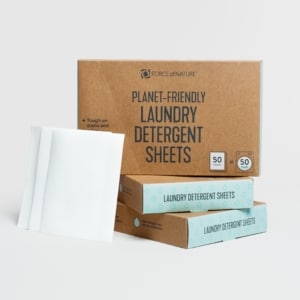
Force of Nature Laundry Detergent Sheets have earned the National Eczema Association Seal of Acceptance. They’re fragrance-free, dye-free and made without MIT, CMIT or BIT preservatives.
Do Laundry Detergents for Sensitive Skin Really Work?
Yes—if the formula is good enough. A detergent designed for sensitive skin doesn’t automatically have to be less effective than a conventional detergent.
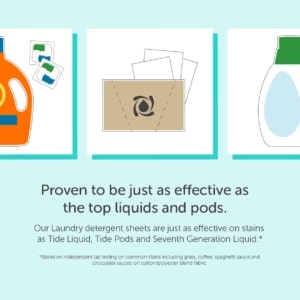
Force of Nature Laundry Detergent Sheets were independently tested in a 3rd-party lab and proven to be just as effective on common stains as Tide Liquid, Tide Pods and Seventh Generation Liquid.
So you don’t have to choose between a detergent designed with sensitive skin in mind and one that actually gets family laundry clean.
If you’re still giving the little sheet some serious side-eye, our guide to whether laundry detergent sheets really work goes deeper into cleaning performance, stains, cold water and HE washers.
What to Do If You Suspect Your Laundry Detergent Is Causing a Reaction
If you notice a pattern between freshly washed clothes and skin irritation, it can help to think through what changed in your laundry routine. A dermatologist can help determine whether you’re dealing with allergic contact dermatitis, irritation or something unrelated to laundry.
- Think about timing. Did symptoms start after changing detergent or another laundry product?
- Check everything in the laundry routine. Are you also using fabric softener, dryer sheets, scent boosters or stain treatments?
- Check the ingredients. Does the product contain fragrance, dyes or an allergen you already know you react to?
- Talk with a dermatologist if the reaction persists or keeps returning. Patch testing can help identify specific contact allergens.
And resist the urge to rub concentrated laundry detergent directly onto your skin to “test” it yourself. Detergents can be irritating even in people who aren’t allergic to them, so that experiment is better left off the weekend to-do list.
Why We Made Force of Nature Laundry Detergent Sheets for Sensitive Skin
We wanted the same thing a lot of parents are looking for: laundry detergent that can handle real family messes without loading the formula with ingredients we’d rather skip.
Force of Nature Laundry Detergent Sheets are:
- Fragrance-free
- Dye-free
- Made without MIT, CMIT or BIT preservatives
- Made without phosphates, optical brighteners, bleach, phthalates or parabens
- Awarded the National Eczema Association Seal of Acceptance
- Independently tested in a 3rd-party lab and proven just as effective on common stains as Tide Liquid, Tide Pods and Seventh Generation Liquid
If sensitive skin is what brought you here, that combination matters: independent skin-safety credentials without giving up cleaning performance.
Shop Force of Nature Laundry Detergent Sheets
And If You’re Rethinking the Rest of Your Cleaning Routine…
If you’ve started reading laundry detergent labels because someone in your family has eczema, allergies or sensitive skin, there’s a decent chance you’ve started eyeing the bottles under the kitchen sink too. Funny how one ingredient label can send a mama down an entire household rabbit hole.
And that’s actually worth thinking about. Laundry detergent isn’t the only product your family comes into contact with every day. Cleaners are used on counters, high chairs, toys, bathroom surfaces, floors and all the other places little hands—and occasionally little faces—end up.
If you’re trying to reduce common triggers across your home, our guides to cleaning products for eczema and sensitive skin and cleaning products for asthma and allergies explain what to look for beyond the laundry room.
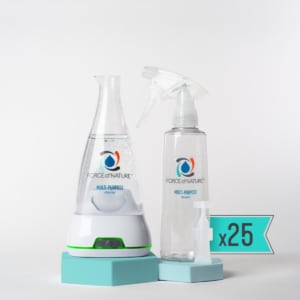
And if you want to simplify things, Force of Nature Cleaner & Disinfectant is the other half of the routine we use for sensitive families. You make it at home from salt, water and vinegar, and it cleans, deodorizes and disinfects without added fragrance, dyes or preservatives. It’s an EPA-registered disinfectant that kills 99.9% of germs on hard, non-porous surfaces when used as directed.
It has also earned the National Eczema Association Seal of Acceptance—so the same kind of thoughtful ingredient and sensitive-skin standards you’re looking for in the laundry room can follow you into the rest of the house.
Because once you finally find products that work and don’t make you second-guess what’s in them, the last thing you need is six more bottles to research.
Your Questions About Laundry Detergent Allergies, Answered
What does a laundry detergent allergy look like?
A reaction to laundry detergent can look like contact dermatitis, with symptoms like itching, redness, a rash, dry or scaly skin, swelling, burning or tenderness. In some cases, bumps or blisters can occur. Because these symptoms can overlap with eczema and other skin conditions, a recurring or severe rash is worth discussing with a healthcare professional.
Can you suddenly become allergic to laundry detergent?
Yes. Allergic contact dermatitis can develop after repeated exposure to an allergen, so it’s possible to react to an ingredient you previously used without a problem. But a new rash doesn’t automatically mean your detergent is the cause—a formula change, another laundry product or an unrelated skin issue could also be responsible.
What ingredients in laundry detergent can cause allergic reactions?
Potential triggers can include fragrance and certain preservatives. Isothiazolinone preservatives such as methylisothiazolinone (MIT), methylchloroisothiazolinone (CMIT) and benzisothiazolinone (BIT) are recognized contact allergens. People with known allergies or sensitive skin may want to check ingredient lists for these substances.
Can fragrance in laundry detergent cause a rash?
Yes. Fragrance is a well-established cause of allergic contact dermatitis and can also be a concern for people with sensitive skin. If fragrance seems to be a trigger in your household, look for a genuinely fragrance-free detergent rather than assuming “unscented” means the same thing.
Are laundry detergent allergies common?
True allergic contact dermatitis caused specifically by laundry detergent appears to be relatively uncommon. Irritant contact dermatitis and other skin conditions can produce similar symptoms, which is why a rash after doing laundry doesn’t necessarily mean you have a detergent allergy.
What laundry detergent is best for eczema or sensitive skin?
There isn’t one detergent that’s automatically best for everyone, but look for fragrance-free and dye-free formulas, avoid allergens you already know you’re sensitive to, and consider independent sensitive-skin certifications. Force of Nature Laundry Detergent Sheets are fragrance-free, dye-free, made without MIT, CMIT or BIT preservatives, and have earned the National Eczema Association Seal of Acceptance for people with eczema and sensitive skin.
Can hypoallergenic laundry detergent still cause a reaction?
Yes. Hypoallergenic doesn’t guarantee that no one will react to a product. There is no standardized regulatory definition of hypoallergenic. If allergies, eczema or sensitive skin are a concern, look beyond the word on the package to the actual ingredients and any independent safety or sensitive-skin certifications.