If you’ve ever opened a bottle of bleach and immediately stepped back because of the smell, you’re not imagining things -it is harsh.
So it’s completely fair to ask:
Is hypochlorous acid actually safer than bleach?
Short answer: Yes – when used as directed, hypochlorous acid is widely considered a much safer option for cleaning and disinfecting. But why it’s safer (and when it matters most) is what really helps you decide what to use in your home.
Let’s break it down in a simple, real-life way.
What’s the Difference Between Bleach and Hypochlorous Acid?
Bleach (sodium hypochlorite) is a strong chemical disinfectant that’s been used for decades to kill germs.
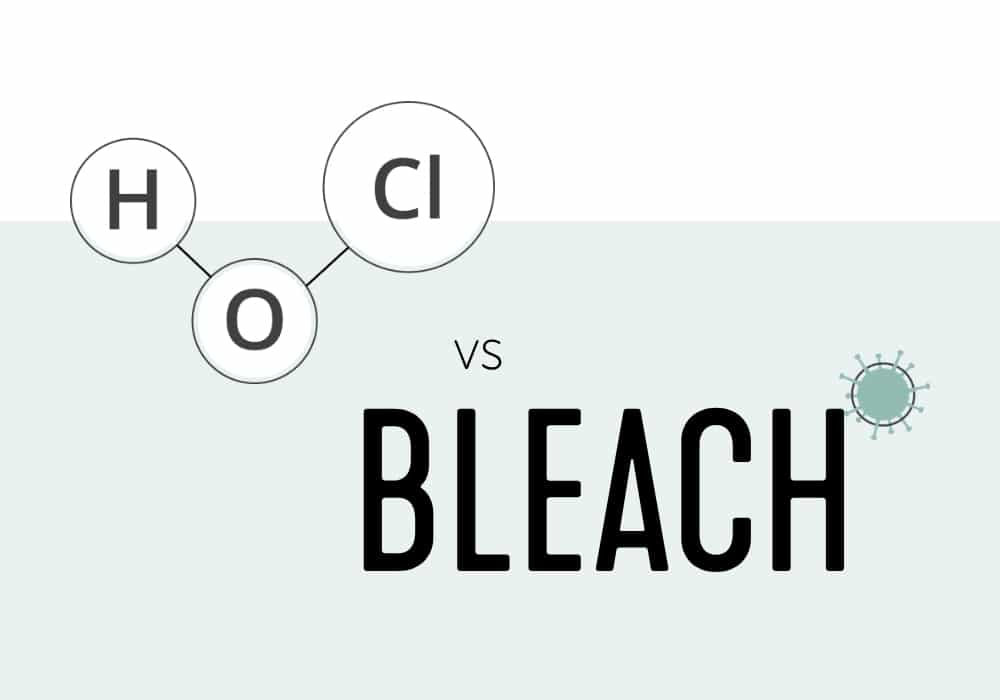
Hypochlorous acid (HOCl) is different from bleach. It’s actually a substance your own immune system produces to fight bacteria and viruses.
That’s why you’ll find hypochlorous acid used in:
- wound care
- eye care products
- skin treatments
…and now, increasingly, in household cleaning.
See how bleach compares to electrolyzed water and hypochlorous acid. For a broader guide to bleach-free disinfecting options, see Best Bleach Alternatives for Disinfecting: What Actually Works?
Why Bleach Can Be Risky to Use
Bleach works, but it comes with tradeoffs, especially in a home with kids or pets.
1. Harmful fumes
Bleach releases fumes that can:
- irritate your lungs
- trigger asthma symptoms and cause asthma in people who have never had it
- make it hazardous to use without gloves or masks
2. Skin and eye irritation
Even small splashes can:
- burn or irritate skin and eyes
- damage fabrics
That’s why bleach labels recommend:
- gloves
- ventilation
- careful dilution
3. Residue concerns
Bleach leaves behind residues that:
- need to be rinsed
- aren’t safe for surfaces kids or pets touch
If you’re comparing safety, it helps to start with what bleach is and how it’s used in cleaning products. If you’re comparing disinfectants based on both safety and germ-kill, see What Is the Safest Disinfectant? (And What Actually Kills Germs).
Why Hypochlorous Acid Is Considered Safer
Hypochlorous acid (HOCl) takes a completely different approach.
1. No harmful fumes
It doesn’t release strong, harmful fumes like bleach, which makes it much easier to use:
- around kids
- around pets
- without gloves or masks
2. Gentle on skin
Because it’s the same substance your body naturally produces to fight germs, hypochlorous acid is not a skin or respiratory irritant like bleach and is used in products designed for sensitive skin.
3. No toxic residues
It breaks down into simple, non-toxic substances (like salt and water), so you don’t have to worry about lingering chemical residues on surfaces.
But Is It Still Effective?
This is the big question and an important one.
A safer cleaner only works if it still gets the job done.
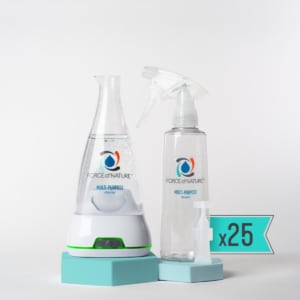
Force of Nature uses hypochlorous acid at a concentration proven to disinfect and is an EPA-registered disinfectant that kills 99.9% of germs when used as directed on hard, non-porous surfaces.
See how hypochlorous acid compares to bleach for disinfecting performance.
When Safety Really Matters Most
This is where the difference becomes very real.
Many families choose hypochlorous acid over bleach because it’s:
- a better option for high-touch surfaces (like toys, high chairs, counters)
- easier to use without worrying about fumes or rinsing
- a better fit for homes with kids, pets, or sensitivities
It’s not just about what kills germs – it’s about what you feel comfortable using in your home.
So, Is Hypochlorous Acid Safer Than Bleach?
If you’re comparing the two for home use:
Yes – hypochlorous acid (HOCl) is generally considered much safer than bleach, especially in terms of:
-
- air quality (no harmful fumes)
- skin contact (no allergens or irritants)
- safety on surfaces (doesn’t degrade surfaces over time like bleach)
And the best part is you don’t have to give up disinfecting power to get that safety.
FAQs About Hypochlorous Acid vs Bleach
Is hypochlorous acid safer than bleach for homes with kids and pets?
Yes. Hypochlorous acid is widely considered safer than bleach because it does not release harmful fumes, is not a skin or respiratory irritant like bleach, and does not leave toxic residues, making it a better option for homes with kids and pets when used as directed.
Does hypochlorous acid disinfect as well as bleach?
Force of Nature uses hypochlorous acid at a concentration proven to disinfect and is an EPA-registered disinfectant that kills 99.9% of germs when used as directed on hard, non-porous surfaces. Not all hypochlorous acid products are formulated at the same strength, so it is important to use one that is EPA registered for disinfecting.
Do you need to rinse surfaces after using hypochlorous acid like bleach?
No. Unlike bleach, hypochlorous acid does not leave behind harmful chemical residues and typically does not require rinsing when used as directed.
Is hypochlorous acid toxic?
Hypochlorous acid is not considered toxic when used as directed. It’s the same substance naturally produced by the human body to fight germs and is commonly used in wound care and skin applications.