Most of us don’t think twice about the cleaning products we use every day. But if you’ve ever wondered whether those sprays, wipes, and disinfectants could affect your health—you’re not overthinking it.
Cleaning products can play an important role in keeping your home safe and hygienic. At the same time, certain ingredients and repeated exposure—especially in enclosed indoor spaces—can contribute to respiratory irritation, skin reactions, and other health concerns.
Here’s what the research shows, what ingredients to watch for, and how to reduce your family’s exposure without sacrificing a clean home.
How Cleaning Products Can Affect Your Health
Cleaning products can impact health in a few key ways:
- Breathing in fumes from sprays, disinfectants, and fragranced products
- Skin contact with residues left on surfaces
- Repeated exposure over time, especially in homes where cleaning happens frequently
For families with young children, asthma, allergies, or sensitive skin, these exposures can add up.
Respiratory Effects: Asthma, Irritation, and Indoor Air Quality
Cleaning products can release fumes or volatile compounds that can irritate the airways.
Research has found that:
- Frequent use of cleaning sprays is associated with increased asthma symptoms (study)
- Exposure to cleaning chemicals in early life may increase asthma risk (research)
- Higher exposure is linked to increased wheezing and allergies in children (report)
This matters because indoor air quality plays a big role in overall health—especially for kids, who breathe more air relative to their size and spend more time close to floors and surfaces.
Skin Exposure and Residue on Surfaces
It’s not just what’s in the air—it’s also what’s left behind.
Cleaning products can leave residues on surfaces like countertops, floors, and toys. These residues can come into contact with skin throughout the day, especially for babies and young children.
This can contribute to:
- Skin irritation or allergic reactions
- Eczema and psoriasis flare ups
Why Babies and Young Children Are More Vulnerable
Babies and young children aren’t just small adults—their exposure patterns are completely different.
They are more vulnerable because they:
- Spend more time on floors and surfaces
- Frequently put hands and objects in their mouths
- Have developing lungs and immune systems
If you want a deeper dive into this specifically, we break it down here:
Are cleaning products harmful to babies?
Ingredients That Can Contribute to Health Risks
Not all cleaning products are the same. Certain ingredients are more commonly linked to irritation or repeated exposure concerns.
Some of the most common ingredients to be aware of include:
- Fragrance (which can contain undisclosed chemicals like phthalates that aren’t listed on labels)
- Quaternary ammonium compounds (quats), which are linked to a wide range of health concerns, including respiratory irritation
- Bleach (sodium hypochlorite), which can create strong fumes and requires careful handling
- Preservatives like methylisothiazolinone (MIT), which have been linked to allergic and respiratory reactions
- Dyes, which are often added for appearance rather than function and can contribute to unnecessary exposure
You can explore these in more detail here:
Top ingredients to avoid in cleaning products
It’s Not Just One Exposure—It’s Repeated Use Over Time
One of the biggest misconceptions is that risk comes from a single use. In reality, it’s about repeated exposure.
Even low-level exposures can add up over time—especially when multiple products are used in combination.
Do You Need to Avoid Cleaning Products Altogether?
Not at all.
Cleaning and disinfecting are important, especially for things like food surfaces or during illness.
The goal isn’t to stop cleaning. It’s to be more intentional about what you use and how you use it.
How to Reduce Your Family’s Exposure
You don’t need to overhaul everything overnight. Small changes can make a meaningful difference.
- Choose products without added fragrance, dyes, or preservatives
- Avoid disinfectants with quats, bleach, or thymol
- Use products that don’t leave residues (or rinse when directed)
If you’re trying to figure out what to use instead, this guide can help:
How to choose cleaning products safe for your home
A Simpler Approach to Cleaning
For many families, reducing exposure comes down to simplifying their routine.
Instead of using multiple products with different ingredients, some choose solutions designed to clean, deodorize, and disinfect effectively without harsh fumes or residues.
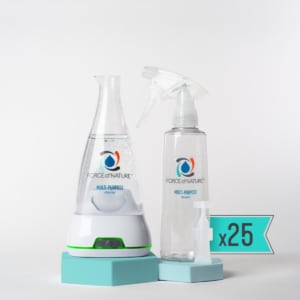
For example, Force of Nature uses electricity to convert salt, water, and vinegar into an all-in-one cleaning, deodorizing, and disinfecting formula. This process changes the molecular structure of the solution to create hypochlorous acid—an antimicrobial commonly used in wound care, healthcare, and veterinary applications.
That means you can clean and disinfect high-touch surfaces without the harmful ingredients found in many traditional cleaners.