 If you’re looking for a non-toxic disinfectant, you probably want two things at once: something that actually kills germs and something you feel good about using around your family.
The tricky part? Plenty of products marketed as “natural” or “non-toxic” are cleaners—but they aren’t actually disinfectants.
So how do you find a non-toxic disinfectant that really works? In this guide, we’ll break down what to look for in a non-toxic disinfectant, when disinfecting matters, what ingredients to watch for, and how to choose a disinfectant that balances both safety and effectiveness.
Are There Non-Toxic Disinfectants?
Yes — but not every product marketed as “natural” or “non-toxic” is actually a disinfectant. In the U.S., a product making disinfecting claims must be EPA-registered and have specific germ-kill claims.
What Makes a Non-Toxic Disinfectant Effective?
A non-toxic disinfectant isn’t just about whether it kills germs—it’s also about what it exposes your family to while doing it.
A non-toxic disinfectant should:
- Kill relevant germs effectively when used as directed
- Be EPA-registered for disinfecting claims against the germs you’re concerned about
- Avoid harmful fumes or residues when possible
- Be appropriate for the surfaces you use most
- Be clear about active ingredients and safety instructions
- Fit your real-life needs, whether that’s cold and flu season, stomach bugs, or food prep surfaces
In other words: the best non-toxic disinfectant is one that balances germ-kill power with lower exposure concerns.
For a deeper breakdown of cleaning vs disinfecting, see Cleaning vs Disinfecting vs Sanitizing: What’s the Difference?.
Cleaning vs Disinfecting: When Do You Need a Disinfectant Instead of a Cleaner?
Sticky messes, grease, soap scum, and visible dirt don’t always require disinfecting.
Disinfecting matters more when:
- Someone in your home is sick
- You’re dealing with food that can carry food-borne bacteria and viruses like raw meat, poultry, or eggs
- You’re cleaning high-risk surfaces during cold, flu, RSV, or norovirus season
- You need to eliminate mold or mildew
- You need to kill specific bacteria or viruses on hard, non-porous surfaces
Ingredients to Avoid When Choosing a Non-Toxic Disinfectant
Many conventional disinfectants are effective—but some families prefer to avoid certain ingredients because of respiratory irritation, skin sensitivity, or repeated exposure concerns.
Bleach (Sodium Hypochlorite)
Bleach can disinfect effectively, but it can also produce harmful fumes and residues and may be irritating, especially around kids, pets, asthma, or sensitive households.
Learn more in The Scary Truth About Bleach and Bleach vs Hypochlorous Acid: What’s the Difference?.
Quaternary Ammonium Compounds (Quats)
Quats are common disinfecting chemicals found in sprays and wipes, but some families try to avoid them due to concerns like respiratory irritation and long-term health risks.
Learn more in What Are Quaternary Ammonium Compounds (Quats) in Cleaning Products? What to Know & What to Avoid.
Fragrance and Dyes
Added fragrance and dyes don’t improve disinfecting performance, and fragrance can include undisclosed chemical blends that some families prefer to avoid. Learn more about hidden ingredients commonly found in fragrance in Phthalates in Cleaning Products.
Learn more in What Fragrance Really Means in Cleaning Products.
Which Non-Toxic Disinfectants Actually Kill Germs?
The answer depends on which germs you’re trying to kill and where you’re using the product—but in general, safer disinfecting means looking for options that are both EPA-registered and designed to minimize harmful fumes or residues.
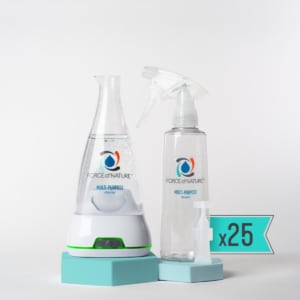
Force of Nature is one example: it’s an EPA-registered disinfectant made without bleach, quats, ammonia, fragrance, dyes, or preservatives. It has no harmful fumes or residues to rinse.
Force of Nature uses hypochlorous acid, a disinfecting ingredient used in wound care, eye care, veterinary applications, and EPA-registered disinfecting products. For many families, it stands out because it can offer effective germ-kill with a different safety profile than many traditional disinfectants.
At the right concentration, it’s gentle on skin so you don’t have to rinse it, and it can kill bacteria, viruses, mold and mildew. To better understand how hypochlorous acid is created, see How Electrolyzed Water Works: Hypochlorous Acid.
If you’re evaluating a hypochlorous acid-based disinfectant like Force of Nature, Does Force of Nature Actually Work? Science, Results & Real Use breaks down the science, while Force of Nature Test Results: Cleaning & Disinfecting Performance shares independent lab test data.
Safest Disinfectant for Babies, Kids & Sensitive Homes
If you’re disinfecting around babies, kids, pets, asthma, allergies, or sensitive skin, it can be especially helpful to prioritize disinfectants that don’t leave harmful residues, minimize harmful fumes, avoid fragrance or dyes, and are appropriate for the surfaces your family touches most.
For many families, safer disinfecting decisions also overlap with broader questions like how to choose safer cleaning products for kids, how cleaning chemicals may affect babies and how to reduce exposure, and what to look for in asthma- and allergy-conscious cleaning products.
The goal isn’t to avoid disinfecting—it’s to choose a disinfectant that’s effective enough to kill germs and safe enough to use as often as your home needs.
When Pathogen-Specific Disinfecting Matters
If you’re specifically worried about viruses like Norovirus, flu, Salmonella, RSV, or other illness-related germs, it’s important to remember that not every disinfectant works against every pathogen.
That’s why EPA registration and organism-specific claims matter so much—especially if you’re trying to target tougher viruses or specific household illness concerns.
For example, if you’re trying to understand whether a disinfectant is effective against Norovirus and other viruses, or you’re looking for more specific guidance on what actually kills the flu virus at home, pathogen-specific guidance can help you make more informed choices. Or if you cook with chicken or eggs frequently and are wondering about what kills Salmonella on surfaces, you’ll want to choose a disinfectant that’s been tested against Salmonella.
The Bottom Line
The best non-toxic disinfectant should do two things well: kill the germs you’re concerned about and avoid ingredients you’d rather not use around your family.
That means looking beyond buzzwords like “natural” or “clean” and focusing instead on:
- EPA registration
- Active ingredients
- Surface safety
- Family needs
- Real germ-kill claims
Because when it comes to disinfecting, safety and effectiveness both matter.