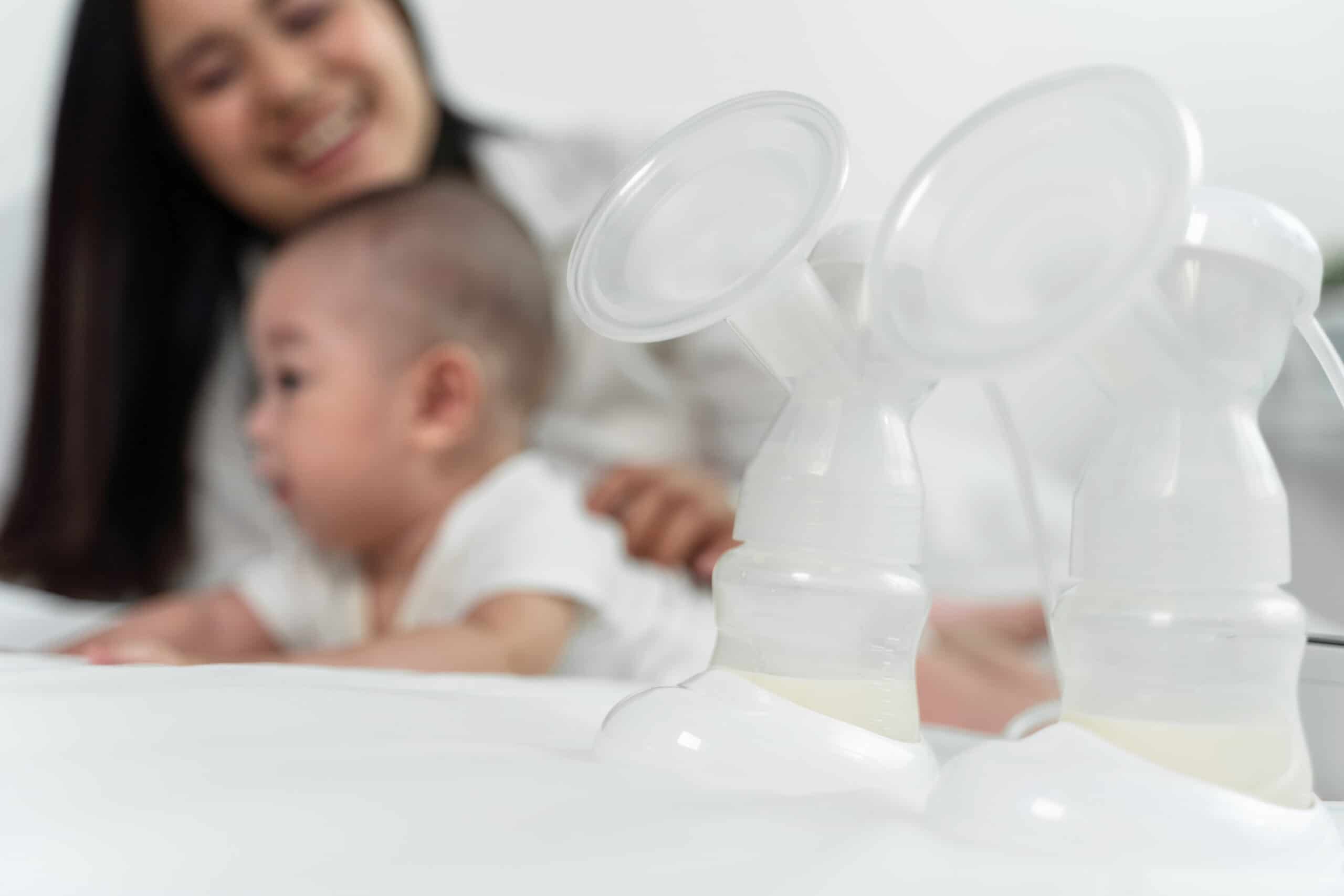
When you’re pumping, the last thing you need is another complicated cleaning routine. But because breast milk residue can collect in all those little valves, membranes and connectors, cleaning pump parts thoroughly after every use really does matter.
The good news: the process is pretty straightforward once you know which parts need to be washed, when disinfecting can provide extra germ protection and what should simply be left alone. Here’s how to clean your breast pump parts safely—and where Force of Nature can help make the routine a little easier.
The Quick Answer: How to Clean Breast Pump Parts
- Take the pump kit apart and separate every piece that came into contact with breast milk.
- Rinse and clean milk-contact parts under running water to remove remaining milk. You want to make sure all the milk residue is gone before the next step, which is sanitizing and disinfecting.
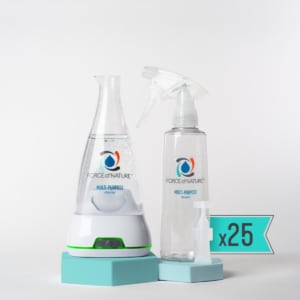
- Spray compatible parts with Force of Nature according to label directions. Let sit for 2 minutes.
- Let everything air-dry completely before reassembling or storing it.
Always check the instructions for your particular pump, since the parts—and their cleaning requirements—can vary by manufacturer.
1. Take Apart and Wash Your Pump Parts After Every Use
Yes, even when it feels like you just washed them.
After pumping, take apart every removable piece that came into contact with your breast or breast milk. Depending on your pump, that may include:
- Bottles or milk-collection cups
- Breast shields or flanges
- Valves
- Membranes
- Connectors
- Backflow protectors that came into contact with milk
Rinse and clean the parts under running water to remove the all remaining milk and milk residue. You can also use the dishwasher if your pump manufacturer says the parts are dishwasher-safe.
This washing step is important: spraying disinfectant onto parts that still have milk residue on them isn’t a shortcut. Cleaning removes the residue first so that a disinfectant can make full contact with the surface. The CDC recommends cleaning breast pump parts that come into contact with milk after every use.
Not quite sure how cleaning, sanitizing and disinfecting differ? Our guide to cleaning vs. sanitizing vs. disinfecting breaks it down.
2. Disinfect Compatible Pump Parts for Extra Germ Protection
Once the parts have been cleaned from residue, Force of Nature can be used to disinfect.
Spray each part thoroughly until the surface is wet. Let it remain wet for two minutes, then allow it to air-dry completely. No rinsing is required when Force of Nature is used as directed.
Because pump materials and designs vary, always check your pump manufacturer’s care instructions before applying any cleaning or disinfecting product.
Force of Nature is an EPA-registered disinfectant made without bleach, quats, added fragrance, dyes or preservatives, so it gives parents a way to disinfect without introducing those ingredients around your feeding gear.
3. Treat Breast Pump Tubing Differently
Tubing is the odd one out here—and it generally should not be tossed into the sink or sprayed along with the other parts.
When a pump is assembled and working correctly, breast milk should not enter the tubing, so it does not ordinarily need to be cleaned. Inspect it after each use and follow your manufacturer’s directions if you notice moisture or milk inside.
If you see a few water droplets, the CDC recommends disconnecting the tubing from the pump kit while leaving it attached to the pump, then running the pump for a few minutes to help dry it. If milk or mold gets into the tubing, replace it rather than trying to clean it.
If the outside of the tubing gets dirty, wipe it with a damp cloth rather than soaking it.
4. Wipe Down the Breast Pump Exterior
Pumping can involve a surprising amount of multitasking, which means the pump controls and exterior get touched a lot.
Unplug the pump first. Spray Force of Nature onto a clean cloth, then wipe the exterior, buttons and other compatible hard surfaces. Never spray liquid directly into the motor, electrical openings or charging ports, and never submerge the electrical unit in water. Allow the pump to dry completely before plugging it back in.
5. Let Everything Air-Dry Completely
Once the parts are clean, place them on a clean drying rack or unused paper towel in an area protected from dirt and dust. Let every piece air-dry completely before reassembling or storing the pump.
As tempting as it is to speed things along, don’t rub or pat the parts dry with a used kitchen towel. Towels can transfer germs right back onto the parts you just cleaned.
When everything is fully dry, reassemble the pump or store the parts in a clean, protected area until the next session.
Do Breast Pump Parts Also Need to Be Sanitized?
Cleaning after every use is the essential first step. The CDC also recommends sanitizing pump parts at least once a day for additional germ removal, particularly when a baby:
- Is younger than two months old
- Was born prematurely
- Has a weakened immune system
Review the CDC’s breast pump hygiene guidance for more information. Your pediatrician may recommend additional precautions if your baby was born prematurely or has other health concerns.
What Else Can You Clean Around Feeding Time?
Once you have Force of Nature nearby, you can also use it on other types of baby gear like:
- Bottles and nipples
- Pacifiers
- High-chair trays
- Reusable cups and water bottles
- Changing tables
- Stroller handles
- Toys
Follow the product directions and the item manufacturer’s care instructions, especially for anything with electronic components or specialty materials.
A Little Less to Worry About
Between pumping, feeding, washing, drying and doing it all over again, keeping pump parts clean can feel like its own full-time job. A simple routine helps: wash away the milk residue first, disinfect compatible parts and let everything dry completely.
Force of Nature gives parents an effective disinfecting option without bleach, quats or added fragrance—and one formula you can also use to keep virtually all the surfaces in your home clean and disinfected.
Learn more about Force of Nature.
Your Questions About Cleaning Breast Pump Parts, Answered
Do I need to wash breast pump parts after every use?
Yes. Any pump parts that come into contact with breast milk should be cleaned after every use. Rinse away visible milk, then wash the parts thoroughly with dish soap and warm water or place them in the dishwasher if the manufacturer says they are dishwasher-safe. To disinfect the parts (which kills 99.9% of bacteria and viruses), next spray them thoroughly and let them sit for the amount of time specified on the disinfectant’s label. For Force of Nature, the disinfecting time is 2 minutes.
Is rinsing breast pump parts with water enough?
No. Rinsing helps remove some milk residue, but it does not replace washing. Parts that come into contact with breast milk should be thoroughly rinsed and cleaned after each use to be sure all the residue is gone. Then, if you want to disinfect the parts—to kill 99.9% of germs—you should spray them thoroughly and let them sit for the amount of time specified on the disinfectant’s label. For Force of Nature, the disinfecting time is 2 minutes.
Can I use Force of Nature on breast pump parts?
Yes. Force of Nature can be used to clean and disinfect breast pump parts after they have been thoroughly rinsed and cleaned so that all residue has been removed. This allows Force of Nature to come into contact with the entire surface without residue getting in the way. Spray the parts with Force of Nature until wet, allow them to remain wet for 2 minutes, then let them air-dry completely. Always follow your pump manufacturer’s care instructions.