If you’ve ever watched your dog lick the kitchen floor five minutes after you mopped it — or caught your cat lounging on a freshly cleaned countertop — you’ve probably wondered: are my cleaning products actually safe for my pets?
It’s a fair question. Dogs, cats, and other household pets spend far more time on floors, rugs, furniture, and other surfaces than we do. They also groom themselves by licking their paws and fur, which can increase their exposure to whatever cleaning products we use around the home.
The good news? Keeping a clean home and keeping your pets safe don’t have to be competing goals.
Here’s what to know about choosing pet-safe cleaning products, which ingredients to avoid, and how to create a cleaner, healthier home for every member of the family — four-legged ones included.
What Makes a Cleaning Product Pet Safe?
A pet-safe cleaning product should effectively clean your home without leaving behind harmful fumes, irritating residues, or ingredients that may be harmful if pets come into contact with treated surfaces.
When evaluating cleaning products, it helps to look beyond marketing claims like “green,” “natural,” or “eco-friendly.” Instead, focus on:
- Whether the ingredients are fully listed on labels
- Whether the product contains fragrances
- Whether it leaves residues that require rinsing
- Whether it has been tested for safety and effectiveness
- Whether it contains ingredients associated with respiratory or skin irritation
If you’re trying to decode common label claims, our guide to cleaning product labels and what terms like natural and non-toxic really mean can help. Or if you’re looking to switch out some of your cleaning products, read our guide to the best non-toxic cleaning products: what to look for and what actually works.
Cleaning Product Ingredients to Avoid Around Pets
Cleaning ingredients can be irritating to both people and pets, especially when used frequently or in poorly ventilated spaces.
Bleach
Bleach is a powerful disinfectant, but it also produces strong fumes that can irritate the eyes, skin, and respiratory systems of both humans and animals.
Learn more about what bleach is, how it works, and its potential drawbacks.
Fragrance
Many people don’t realize that a single “fragrance” listing on a label represents dozens of individual ingredients.
Some fragrance chemicals can cause sensitivities and irritation, which is why fragrance-free products are often preferred for sensitive households.
Learn more about what fragrance means in cleaning products and why ingredient transparency matters.
Quaternary Ammonium Compounds (Quats)
Quats are disinfecting chemicals commonly found in wipes, sprays, and disinfecting products. Research has linked quat exposure to respiratory irritation and asthma concerns, making them an ingredient many families choose to avoid.
Read more about quats in cleaning products.
Ammonia-Based Cleaners
Ammonia-containing products produce strong odors and can irritate sensitive respiratory systems. Because pets spend so much time on floors and treated surfaces, many pet owners prefer gentler alternatives.
Pet-Safe Cleaning Products: Quick Comparison
| Cleaner Type | Why Pet Owners May Avoid It | Pet-Friendlier Alternative |
|---|---|---|
| Bleach | Strong fumes; can irritate eyes, skin, and respiratory systems. | A fragrance-free disinfectant without harmful fumes. |
| Fragranced cleaners | “Fragrance” can hide dozens of undisclosed ingredients that can trigger skin or respiratory reactions in pets. | Fragrance-free cleaning products. |
| Quats | Linked to respiratory irritation and asthma concerns. | A quat-free disinfectant. |
| Hypochlorous acid (HOCl) | No bleach, quats, fragrance, dyes, preservatives, or harmful fumes. | Use on pet bowls, toys, crates, beds, and everyday household surfaces as directed. |
One ingredient that has gained attention among pet owners is hypochlorous acid (HOCl), a disinfecting ingredient used in products like Force of Nature. Unlike bleach and quats, hypochlorous acid is naturally produced by the immune systems of humans and animals as part of the body’s defense against germs.
Signs Your Pet May Be Sensitive to Cleaning Products
Every pet is different, but some common signs that a cleaning product may be causing irritation include:
- Excessive licking of paws
- Red or irritated skin
- Watery eyes
- Sneezing or coughing
- Wheezing or breathing difficulties
- Lethargy
- Vomiting after exposure
If you suspect your pet has been exposed to a harmful substance, contact your veterinarian immediately.
Are Non-Toxic Cleaning Products Better for Pets?
Many pet owners choose non-toxic cleaning products because they want to reduce unnecessary chemical exposure in their homes.
That doesn’t mean a product has to sacrifice performance. In fact, some of today’s most effective cleaning and disinfecting technologies rely on simpler ingredients rather than long lists of synthetic chemicals.
If you’re interested in learning more about safer cleaning products, learn how to judge what’s the best non-toxic disinfectant and what actually kills germs. You can also learn the difference between natural and non-toxic cleaning products and explore the top ingredients many families choose to avoid in cleaning products.
Is Hypochlorous Acid Safe for Pets?
Hypochlorous acid, also known as HOCl, is the active ingredient in Force of Nature and one of the reasons many pet owners choose it as part of their cleaning routine.
Hypochlorous acid is a compound that is naturally produced by immune systems to fight infection in humans and animals. It’s so effective and gentle that it’s commonly used in veterinary care and even wound healing products.
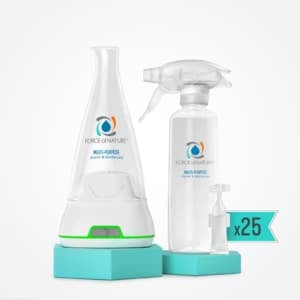
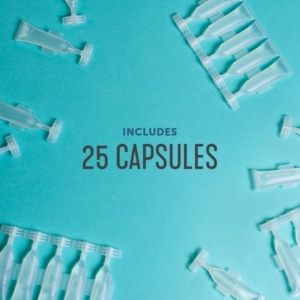
Force of Nature uses electricity to transform tap water plus a capsule of salt, water, and vinegar into a multi-purpose cleaner and EPA-registered disinfectant powered by hypochlorous acid.
Force of Nature is EPA-registered to kill 99.9% of germs, with no bleach, quats, added fragrance, dyes, preservatives, or harsh fumes. It’s even EPA registered for use in veterinary clinics and hospitals.
If you’re curious about the science behind Force of Nature, learn how electrolyzed water works, explore what electrolyzed water is, and read more about the safety profile of Force of Nature.
How to Clean Common Pet Areas
Pet Bowls
After removing food residue and water, thoroughly spray bowls with Force of Nature and let air dry.
Pet Toys
Spray pet toys thoroughly with Force of Nature and let air dry naturally.
Crates & Carriers
Remove visible debris, spray surfaces thoroughly, wait 2 minutes, then let air dry naturally.
Pet Beds
Always test fabrics for colorfastness first. Spray the surface thoroughly and allow it to dry naturally to eliminate odors.
Pet Accidents
For urine, vomit, and other pet messes, first remove visible soil. Then thoroughly saturate all affected layers — including carpet padding or the underside of rugs if necessary. Let sit for 2 minutes before blotting and cleaning. If there is still any visible mess, spray again, blot and clean. When all visible soil is gone, spray once more and allow the area to dry naturally.
A Note About Birds
Birds have extremely sensitive respiratory systems, and Force of Nature has not been tested around birds. If you’re cleaning a bird cage, remove your bird from the area first, clean the cage, and let the disinfectant dry completely before returning your bird to the cage.
A Cleaner Home for Every Member of the Family
Pets are family. The products we use around them matter.
Choosing pet-safe cleaning products reduces unnecessary exposure to harmful ingredients while still keeping your home clean, odor-free, and healthy.
Whether you’re cleaning muddy paw prints, food bowls, pet beds, crates, or pretty much any other surface, selecting effective products with non-toxic ingredients can create a safer environment for everyone who calls your home their home — including your furry friends.
We wish you and your favorite multi-legged friends lots of snuggles, frisky play and furry kisses!