If you’re wondering what a safer alternative to bleach is, especially around kids and pets, you’re not alone.
Bleach has been the go-to disinfectant for decades, but it comes with tradeoffs that don’t always feel worth it. The good news? There’s a way to disinfect effectively without the fumes, harshness, or extra precautions.
Here’s what to know about using hypochlorous acid (HOCl) as a safer alternative to bleach and how it fits into cleaning at home.
If you’re wondering whether hypochlorous acid works as well as traditional disinfectants, you can see how one hypochlorous acid based disinfectant, Force of Nature, performs in real-world use here: Does Force of Nature actually work?
Why Many Families Are Switching Away From Bleach
#1. Bleach works—but it comes with real risks
Bleach is effective, but it’s also something you have to handle carefully, especially around kids and pets.
Even when used as directed, bleach can:
- Trigger respiratory irritation, especially for people with asthma or sensitivities
- Be linked to long-term lung issues like COPD with repeated exposure
- Cause burns to skin and serious damage to eye tissue
- Create dangerous gases if mixed with other cleaners, including chloramine gas
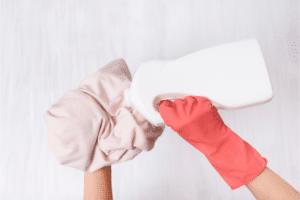
Wearing gloves helps reduce direct contact, but it doesn’t eliminate risks from fumes, accidental splashes, or improper mixing.
That’s why so many families start looking for something that still disinfects, but feels safer and easier to use.
#2. You don’t have to give up disinfecting power to switch
One of the biggest concerns is whether anything can actually replace bleach when it comes to killing germs.
Hypochlorous acid is an EPA-registered disinfectant and is used in products across multiple EPA disinfectant categories, including:
- EPA List N for viruses like SARS-CoV-2
- EPA List Q for emerging viral pathogens
- EPA List G for norovirus
- EPA List H for antibiotic-resistant bacteria like MRSA
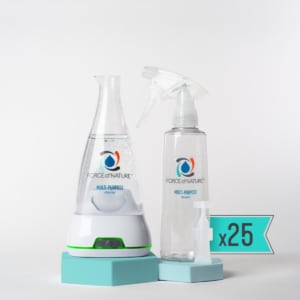
Force of Nature is a Hospital disinfectant that kills 99.9% of viruses and bacteria when used as directed on hard, non-porous surfaces – so you’re not trading effectiveness for peace of mind.
If you want to see how this translates to specific germs, including viruses like Norovirus, you can learn more here: Does Force of Nature kill norovirus?
#3. It’s used in places where safety actually matters
Hypochlorous acid isn’t just used in cleaning; it’s used in medical and health-related settings where safety is critical.
It’s used in wound care and infection control, as well as in eye care, dermatology, and veterinary products because it can kill microbes without harming skin.
That’s what makes it very different from bleach.
You can also explore more about how hypochlorous acid works and where it’s used here: What is hypochlorous acid?
#4. It’s designed to be gentle on skin and surfaces
Hypochlorous acid is certified to be skin-safe and best for sensitive skin by SkinSafe, the Mayo Clinic’s allergy safety rating system. It’s also the only disinfectant and cleaner to earn the National Eczema Association Seal of Acceptance.
Because of how it’s formulated, it doesn’t carry the same risks of burns, irritation, or harmful residues that come with bleach.
#5. You can use it without the extra steps
One of the biggest differences you’ll notice is how simple it is to use.
You don’t need gloves, you don’t need to rinse, and you don’t have to worry about fumes or lingering residues on surfaces – so it fits much more naturally into your cleaning routine.
What’s the Best Alternative to Bleach for Your Home?
If you’re trying to move away from bleach, the goal isn’t just to swap products – it’s to find something that actually works for how you clean.
When comparing alternatives, it helps to understand what bleach is, how it works, and when it’s typically used.
Hypochlorous acid is one alternative option that’s effective, versatile, and safer to use around kids, pets, and everyday messes.
If you’d like to better understand how hypochlorous acid compares to bleach, Bleach vs Hypochlorous Acid: What’s the Difference? breaks down how these disinfecting ingredients differ, while Does Force of Nature Actually Work? explores the science and real-world performance behind Force of Nature. And if you’re specifically worried about tougher viruses like stomach bugs, Does Force of Nature Kill Norovirus? dives deeper into pathogen-specific effectiveness.
For a broader look at bleach-free disinfecting options beyond hypochlorous acid alone, see Best Bleach Alternatives for Disinfecting: What Actually Works?
If you’re deciding not just what replaces bleach, but what may be safest overall, see What Is the Safest Disinfectant? (And What Actually Kills Germs).