Flu season can hit hard — and when it does, a lot of us end up searching the same things: What kills the flu virus? How do I disinfect my house? How do I keep it from spreading to everyone else?
The good news: you don’t need to disinfect your entire life. The highest-impact approach is simple:
- Use a disinfectant that actually kills the flu virus on surfaces,
- Use it correctly (contact time matters), and
- Focus on the high-touch spots where germs spread fastest.
This guide walks you through what works (and what doesn’t), plus practical flu prevention tips for busy families.
What kills the flu virus on surfaces?
If you’re trying to kill the flu virus on hard, non-porous surfaces (like counters, doorknobs, faucets, light switches), the most reliable way is to use an EPA-registered disinfectant and follow the label directions.
Why “EPA-registered” matters: when a product is labeled a disinfectant, it has to meet EPA requirements for germ-killing effectiveness. That means the product is tested against specific germs and must demonstrate it can kill 99.9% of them in a set amount of time when used as directed.
A quick note on flu names: the seasonal flu is caused by influenza viruses (often influenza A or influenza B). Most people just call it “the flu,” and that’s totally fine — but testing and lab results often list a specific influenza virus strain.
Does Force of Nature kill the flu virus?
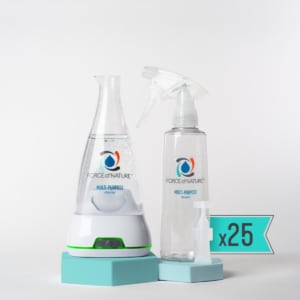
Yes — Force of Nature is an EPA-registered sanitizer and hospital-grade disinfectant, and it kills 99.9% of viruses and bacteria in 2 minutes on hard, non-porous surfaces when used as directed.
Force of Nature has been tested on a range of viruses and bacteria including Influenza A H1N1 (Strain A/Hong Kong/8/68). For even more detail, see our test results page.
When people ask what the best disinfectant for the flu is, the answer comes down to EPA registration, the right virus claim, and using it for the full contact time.
What’s the best disinfectant for the flu?
Short answer: The best disinfectant for the flu virus is an EPA-registered disinfectant that’s proven to kill Influenza A and that you’ll actually use correctly—especially the full contact time. When used as directed, Force of Nature is EPA-registered to kill 99.9% of viruses and bacteria, including Influenza A, in 2 minutes when used as directed.
Looking for the best non-toxic disinfectant for flu season? Choose an EPA-registered disinfectant without harsh fumes or harmful residues to rinse, so it’s safe to use regularly on high-touch surfaces.
How to disinfect for flu season (the part people skip)
This is the difference between “I sprayed it” and “I disinfected it”:
1) Clean first if the surface has any soil or residue
Disinfectants can only work when they come into contact with the entire surface you’re trying to disinfect. That means you can’t disinfect a surface covered in grime or sticky residue. If your surface is visibly dirty, wipe it clean first.
2) Follow the contact time (dwell time)
Contact time is how long the surface needs to stay wet for the disinfectant to do its job based on tested claims.
A practical note: Contact time doesn’t mean “nothing happens until minute 10.” It means the product has killed all the germs on the label by the end of that period.
3) Disinfect the right surfaces
Disinfectants are tested on hard, non-porous surfaces (think counters, doorknobs, sinks, toilets). Soft surfaces and fabrics require different approaches (laundry, hot water, drying, etc.).
High-touch surfaces to disinfect during flu season
If you’re going to disinfect, focus where it matters most — the “high-touch highway” that everyone’s hands share.
Top priorities:
- Doorknobs, light switches
- Fridge handle, cabinet pulls, faucet handles
- Toilet handle, bathroom sink/counter surfaces
- Kitchen counters and table surfaces
- Remote controls, gaming controls, phones, tablets, keyboards (follow device-safe cleaning guidance)
- Car door handles and steering wheel
How often should you disinfect?
- If no one is sick: Focus on the busiest high-touch areas a few times per week (or daily during peak flu season if you want extra coverage).
- If someone is sick: Increase frequency, especially bathrooms and kitchen surfaces, and anything the sick person touches regularly.
Flu prevention tips for real life (not perfection)
1) Use an EPA-registered disinfectant when it matters most
During flu season — or any time when someone is sick — disinfecting high-touch surfaces can help reduce spread.
2) Know the difference between cleaning, sanitizing, and disinfecting
These words sound similar but they’re not:
- Cleaning removes dirt but does not kill germs.
- Sanitizing reduces germs to a safe level according to local health standards, but there is no absolute minimum germ-kill rate.
- Disinfecting kills 99.9% of germs.
During flu season, a good routine is: Clean first → then disinfect high-touch areas (especially if someone is sick). You can read more in depth about Cleaning vs Sanitizing vs Disinfecting if you want.
3) Disinfect safely (because “kills germs” doesn’t always mean “great to breathe”)
Many conventional disinfectants rely on ingredients like bleach or quaternary ammonium compounds (“quats”). They can be effective germ killers, but they’ve been linked to health risks including asthma, allergies, hormone-disruption and more.
If you’re disinfecting often, it’s worth choosing a routine you can actually stick with. For many households, that means prioritizing products that are effective without leaving harsh fumes behind.
4) Create a “sick zone” if someone is symptomatic
If someone in your home has flu symptoms, a little separation goes a long way:
- Designate one blanket/pillow set
- Use one bathroom if possible
- Keep tissues + a lined trash can nearby
- Avoid sharing cups/utensils
Not glamorous, but surprisingly effective.
5) Make handwashing easy enough that it actually happens
Handwashing is still one of the best ways to reduce spread. With kids especially, the trick is convenience:
- Soap they can reach
- A towel within reach
- A simple rule like “wash before snacks”
- Remind: palms, backs of hands, between fingers, thumbs, nails
Kid tip: have them sing “Happy Birthday” twice — that’s about 20 seconds.
6) Don’t forget ventilation
Flu spreads primarily through close contact and respiratory droplets, so airflow matters. Simple actions help:
- Open windows briefly when you can
- Run HVAC fan for circulation
- Use an air purifier in high-traffic rooms or a “sick zone” if you have one
7) Don’t skip “germ fabrics”
Flu season often spreads through hands + shared items. Wash frequently:
- Pillowcases
- Towels and hand towels
- Throw blankets
- Kids’ lovies/stuffies
8) Support the basics: sleep, food, hydration
This isn’t meant to be preachy — it’s just real. When families are run down, everything is harder. Small wins help:
- Prioritize sleep when possible
- Drink more water than you think you need
- Keep meals simple and regular
A quick COVID-19 note
If COVID-19 is your concern, the EPA has a list of disinfectants approved for use against SARS-CoV-2 here: About List N. Even if your main concern is the flu, using EPA-registered disinfectants correctly is the same general principle: right product, right surface, right contact time.
We’re here to help
Flu season can be stressful — especially when you’re trying to protect kids, grandparents, or anyone in the household who tends to get hit hard.
Force of Nature is an EPA-registered sanitizer and hospital-grade disinfectant when used as directed. It kills 99.9% of viruses and bacteria on hard, non-porous surfaces, including Influenza A H1N1. It also kills respiratory viruses.
If you’d like to dig into more test results, you can find them on our test results page — and if you want everyday how-to guidance, our FAQs and tips library can help you build a routine that feels doable.