 If you’re trying to find cleaning products that won’t trigger asthma or allergies, you’ve probably realized it’s not as simple as choosing something labeled “natural” or “green.” Many products still contain ingredients that can irritate airways or cause reactions, even if they sound safe.
If you’ve ever felt confused by labels like “natural,” “clean,” or “non-toxic,” you’re not alone—here’s a simple breakdown of what cleaning product labels actually mean.
The good news is that once you know what to look for, it becomes much easier to choose cleaning products that are both effective and better suited to asthma- and allergy-sensitive households. This guide breaks down which ingredients to avoid, what labels really mean, and what to look for in cleaning products safe for allergies and asthma.
Quick Summary
- “Natural” and “non-toxic” labels don’t automatically mean a product is appropriate for people with asthma or allergies
- Fragrance is a common trigger for people with asthma, allergies or sensitivities
- Certain disinfecting ingredients can irritate the airways
- Certain preservatives, including MIT and CMIT, are known contact allergens
- Fragrance-free formulas with simpler ingredient lists can help reduce exposure to potential irritants and allergens
- There are effective cleaning and disinfecting options that don’t rely on bleach, quats or added fragrance
What Makes a Cleaning Product Safe for Asthma and Allergies?
Not all cleaning products affect people the same way, but certain ingredients are more likely to trigger asthma symptoms, sensitivities or allergic reactions. Products that release strong fumes, contain fragrance, or rely on specific disinfecting chemicals and preservatives can be more irritating—especially with repeated use.
For asthma-sensitive households, reducing exposure to strong fumes and respiratory irritants can be particularly important. For allergy-sensitive households, it also helps to pay attention to fragrance, preservatives and other ingredients that may act as allergens or irritants.
Safer options tend to have simpler ingredient lists, be fragrance-free, and have formulas that don’t leave behind strong residues or lingering fumes.
If you’re wondering why certain cleaning products trigger asthma symptoms in the first place, here’s how cleaning products can affect asthma and how to reduce triggers at home.
What Cleaning Products Are Safe for People With Allergies?
When looking for cleaning products safe for allergies, it’s important to look beyond broad claims like “natural” or “green.” A better approach is to evaluate the actual formula and look for ingredients that are known allergens or may cause irritation.
Fragrance-free products are a good place to start because fragrance can contain multiple ingredients that aren’t individually disclosed on the label. Certain preservatives can also be important to watch for. Methylisothiazolinone (MIT) and methylchloroisothiazolinone (CMIT), for example, are known contact allergens used as preservatives in some household products.
People with allergies may also prefer products with simpler formulas and fewer added ingredients, particularly if they already know they are sensitive to fragrance, preservatives or other common cleaning-product ingredients.
Ingredients to Avoid in Cleaning Products for Asthma and Allergies
Some ingredients are more commonly associated with skin reactions, allergic sensitivities or respiratory irritation. Being aware of these can help you make more informed choices.
- Fragrance: This one word on a product label can encompass multiple undisclosed fragrance ingredients. Fragrance can be a trigger for asthma and may also be a concern for people with fragrance sensitivities or allergies.
- Specific disinfecting chemicals like quats and bleach: These are effective at killing germs but can be irritating to the airways with frequent exposure. If bleach is one of the triggers you’re trying to avoid, see Best Bleach Alternatives for Disinfecting: What Actually Works?
- The preservatives MIT & CMIT: These preservatives are known contact allergens and can cause allergic skin reactions in some people.
- Harsh solvents and additives: Some ingredients release fumes that can linger in the air after cleaning and may be irritating for people with sensitive respiratory systems.
If you want a deeper breakdown of which ingredients to watch for and why they matter, see ingredients to avoid in cleaning products.
You can learn more about these ingredients in our Cleaning Product Ingredient Glossary.
What to Look For in Allergy- and Asthma-Safe Cleaning Products
When choosing cleaning products for a home with asthma or allergies, a few key characteristics can help reduce exposure to potential triggers and irritants.
- Fragrance-free formulas: Avoid added scents that can trigger asthma symptoms, fragrance sensitivities or allergic reactions
- Simpler ingredient lists: Fewer added ingredients can mean fewer potential irritants or allergens to consider
- Formulas without common allergenic preservatives: Check labels for preservatives such as MIT and CMIT if these are a concern for your household
- Low-residue formulas: Look for products that don’t leave strong residues or lingering fumes
- Alternatives to bleach and quats: Households concerned about respiratory irritants may want to consider cleaning and disinfecting options that don’t rely on these ingredients.
If you’re trying to make sense of what “non-toxic” really means when it comes to cleaning products, this guide explains what non-toxic cleaning actually means and how to choose safer options.
For help choosing a safer disinfectant for asthma- and allergy-conscious homes, see What Is the Safest Disinfectant? (And What Actually Kills Germs).
A Simpler, Lower-Exposure Approach to Cleaning
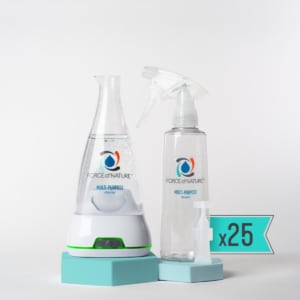
If you’re looking for an option that cleans and disinfects without fragrance, preservatives, bleach, or quats, Force of Nature is an EPA registered hospital disinfectant that uses hypochlorous acid to kill germs.
Force of Nature kills 99.9% of viruses and bacteria and requires no rinsing, gloves, or masks. It’s a simpler option for households looking to reduce exposure to common cleaning-product ingredients that may be a concern for people with asthma, allergies or other sensitivities.
You can also see how Force of Nature is designed to be safe for homes with asthma, allergies, kids, and pets.
If you’re wondering whether a gentler option like this can still disinfect effectively, you can see how Force of Nature works as a disinfectant.
Many families choose Force of Nature as a way to simplify their cleaning routine while reducing exposure to common irritants found in conventional products.