Let’s be real: trying to keep your home safer and healthier can feel like a full-time job—especially when ingredients you’ve never heard of are hiding in everyday products.
If you’ve ever picked up a cleaner, seen the word “fragrance,” and wondered what’s actually in it, you’re not alone. One group of chemicals that’s especially important to know about is phthalates.
This guide is part of our Cleaning Product Ingredient Glossary, where we break down what’s really in common household products and what to watch for.
What are phthalates?
Phthalates (pronounced thal-ates) are chemicals used to make plastics more flexible and to help scents last longer in fragranced personal care and cleaning products.
You’ll often find them in:
- Cleaning and personal care products that list “fragrance” on the label, including things like shampoos, moisturizers, deodorants, hand soaps, deodorizers, glass cleaners, disinfectants, and all-purpose cleaners
- Vinyl flooring and shower curtains
- Plastic packaging and containers, especially those with recycling codes 3 and 7
- Some children’s toys and school supplies that are made with flexible plastic materials
The frustrating part is that phthalates can be very hard to spot unless a company chooses to disclose them—and most don’t.
Why are phthalates a concern?
Phthalate exposure is common, and research has linked certain phthalates to a wide range of health concerns.
- Hormone disruption, especially with phthalates like BBP, DBP, and DEHP
- Premature deaths in adults ages 55–64
- Genital malformations and undescended testes in boys
- Lower sperm counts in men
- Asthma, allergies, and possible links to obesity and diabetes
- Cardiovascular disease, particularly with DEHP
Many of these concerns overlap with broader issues related to how cleaning product exposure can affect your health, especially when exposure happens regularly at home.
Where are phthalates hiding?
This is where phthalates get especially tricky.
In cleaning and personal care products, phthalates are often hidden under the catch-all term “fragrance.” That’s because companies are not required to list fragrance ingredients individually on the label.
So when you see just one word—fragrance—you may be looking at a mix of many undisclosed chemicals, including phthalates.
If that sounds frustrating, it is. It means you have to do your own ingredient homework just to understand what you’re bringing into your home.
How to reduce phthalates in your home
The good news is that there are simple ways to cut down on exposure.
- Choose fragrance-free products: This is one of the biggest shifts you can make. In both cleaning and personal care products, “fragrance” can be a red flag when ingredients aren’t fully disclosed.
- Be picky about household cleaners: Look for options that clean effectively without added fragrance or unnecessary chemicals. This is especially important if you’re trying to find cleaning products that are safer for asthma and allergy-sensitive homes.
- Swap out certain plastics when you can: Try to avoid plastics with recycling codes 3 and 7, and choose glass, stainless steel, ceramic, or wood when possible.
- Ventilate your home regularly: Opening windows, using exhaust fans, and airing out new household items can help reduce indoor exposure.
If you’re trying to simplify what to avoid, this guide to ingredients to avoid in cleaning products is a helpful next step.
A Phthalate-Free Alternative for Cleaning
If you’re trying to reduce phthalates at home, one simple place to start is with your cleaning products.
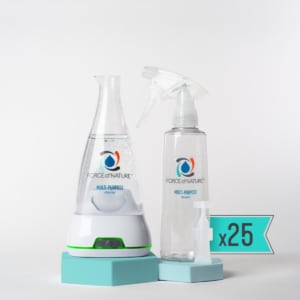
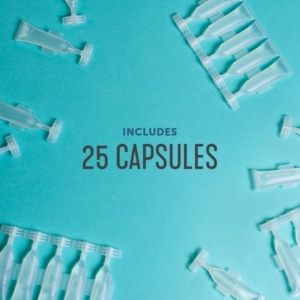
Force of Nature is a small appliance that converts tap water plus a capsule of salt, water, and vinegar into a multi-purpose cleaner, deodorizer, and EPA-registered disinfectant.
It has no added fragrances—which also means no phthalates.
And it kills 99.9% of germs.
So if you’re looking for a way to clean and disinfect without adding more mystery ingredients to your routine, it’s a much simpler option.
Learn More
- Cleaning Product Ingredient Glossary
- What Does “Fragrance” Really Mean in Cleaning Products?
- Cleaning Product Health Risks: What you need to know
- Top Ingredients to Avoid In Cleaning Products for a Safer Home
FAQs About Phthalates in Cleaning Products
What are phthalates in cleaning products?
Why are phthalates a concern?
Where do phthalates hide in cleaning products?
How can I avoid phthalates in cleaning products?
Are phthalates the same thing as fragrance?
Is there a fragrance-free way to clean and disinfect without phthalates?