If you’ve ever stood in the cleaning aisle wondering what labels like “natural,” “clean,” or “non-toxic” actually mean, you’re not imagining the confusion.
A lot of these words sound reassuring, but they don’t always tell you much about what’s really in a product—or whether it’s actually a safer choice for your home.
In this guide, we break down some of the most common cleaning product buzzwords, what they do and don’t mean, and what to look for instead if you’re trying to avoid misleading marketing claims.
What Does “Natural” Mean on Cleaning Products?
When it comes to cleaning products, “natural” sounds helpful—but it doesn’t have a strict, consistent meaning.
A product labeled “natural” may still contain added fragrance, dyes, preservatives, or other ingredients you may be trying to avoid. That’s why two products with very similar “natural” branding can be completely different once you look at the ingredient list.
Instead of focusing on the word “natural,” it’s more useful to look for transparent ingredient lists and products that avoid fragrances, dyes, preservatives, quaternary ammonium compounds (quats) and bleach.
👉 For a deeper breakdown, read Natural Cleaning Products: What to Look For (and What to Avoid).
What Does “Non-Toxic” Mean on Cleaning Products?
“Non-toxic” is one of the most appealing claims on a cleaning product—but like many labels, it doesn’t have a strict, universally enforced definition.
Different brands may use “non-toxic” to mean different things, and the term doesn’t always guarantee that a product avoids ingredients that can cause irritation or sensitivity.
Instead of relying on the label alone, it’s important to look at the full ingredient list and consider how a product is used—especially for high-touch surfaces or everyday cleaning.
👉 If you’re trying to choose safer products for your family, see Cleaning Products Safe for Kids: What to Use (and What to Avoid).
Instead of relying on buzzwords, it helps to know what to actually use, especially if your family has skin or respiratory sensitivities. Here’s a guide to the best cleaning products for asthma and allergies.
What Does “Clean” Mean on a Product Label?
“Clean” is another label that sounds meaningful but can be frustratingly vague.
Brands may use it to suggest that a product is safer, better, or free from certain ingredients, but the label itself doesn’t tell you exactly what standards the product meets.
That means “clean” can be a starting point for curiosity—but not a reason to skip checking the ingredient list.
What Does “Plant-Based” Mean?
“Plant-based” sounds like a clear signal that a product is safer, but it simply means that some ingredients are derived from plants.
It doesn’t necessarily mean the full formula is free from synthetic additives, fragrance blends, preservatives, or other ingredients you may want to avoid.
Like other buzzwords, it’s best used as a starting point—not a final decision.
What Does “Hypoallergenic” Mean on Cleaning Products?
“Hypoallergenic” sounds like it should mean a product is gentler or less likely to cause reactions, but it’s not a reliable indicator of safety.
The term is not regulated, and it doesn’t guarantee that a product is free from ingredients that can trigger sensitivities, especially for people with asthma or allergies.
👉 To better understand common irritants, see Top Ingredients To Avoid In Cleaning Products For A Safer Home.
What Does “Organic” Mean for Cleaning Products?
“Organic” can be especially confusing because people often associate it with food standards and assume it automatically means safer.
But on household cleaning products, the word “organic” doesn’t necessarily tell you whether the full formula avoids irritating or questionable ingredients.
If a product uses the word “organic,” it’s still worth checking for added fragrance, dyes, preservatives, and overall ingredient transparency.
What to Look for Instead of Buzzwords
If labels like “natural,” “clean,” and “chemical-free” aren’t enough, what should you look for instead?
- Transparent ingredient lists
- Formulas that avoid added fragrance, dyes, bleach, preservatives, quaternary ammonium compounds (quats), and unnecessary preservatives
- Products without harmful fumes and residues
- Proven effectiveness for the way you plan to use them
👉 To better understand “chemical-free” claims, read “Chemical-Free” Cleaning Products: What It Really Means (and What to Use Instead).
Or you can learn about Cleaning Product Health Risks: What You Need to Know here.
A Simpler Way to Choose Safer Cleaning Products
Once you realize how inconsistent labels like “natural,” “clean,” and “non-toxic” can be, it often makes sense to look for solutions that are more straightforward.
One approach is using hypochlorous acid, a disinfecting ingredient made from salt, water, and vinegar.
It’s the same molecule your body produces to fight infection and is used in wound care products because it’s so gentle and effective at killing germs. When used in cleaning, it can clean and disinfect effectively without the harshness of traditional chemicals.
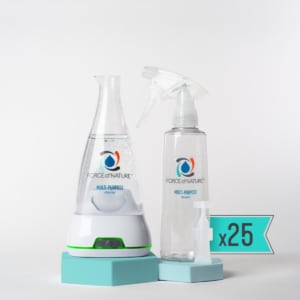
Force of Nature is a small appliance that uses electricity to create hypochlorous acid on your kitchen countertop.
👉 Learn more here:
The Bottom Line
Cleaning product labels can make shopping feel easier, but they often create more confusion than clarity.
The best way to choose safer products is to look past the marketing, check the ingredient list, and focus on whether a product is both effective and designed to reduce unnecessary exposure to harsh chemicals.
Once you know what these labels do—and don’t—mean, it becomes a lot easier to spot greenwashing and choose products with more confidence.