If you’ve been paying closer attention to what’s actually in your cleaning products, you’re not alone.
One group of chemicals that comes up often (but isn’t always easy to recognize) is quaternary ammonium compounds, also known as quats or QACs.
This guide is part of our Cleaning Product Ingredient Glossary, where we break down what’s really in everyday household products and what to watch for.
What are quats (QACs)?
Quats are a class of chemicals used in many disinfectants because they’re effective at killing bacteria and viruses. They work by attaching to the outer surfaces of microbes and disrupting their structure.
Because of this, quats are extremely common. In fact, more than half of the disinfectants on the EPA’s List N (approved for use against SARS-CoV-2) contain quats.
You’ll find them in:
- Disinfectant sprays and wipes
- Household cleaners
- Laundry products and dryer sheets
- Personal care products like shampoos and conditioners
Why are quats a concern?
Quats are effective disinfectants, but research has raised concerns about how they may affect human health—especially with frequent, everyday exposure.
Respiratory and asthma concerns
Quats have been linked to respiratory irritation and may worsen asthma symptoms. In some cases, they are associated with occupational asthma and increased sensitivity to allergens.
If this is something you’re navigating at home, this guide to cleaning products that avoid common asthma triggers can help.
Skin irritation and sensitivities
Quats can also cause skin irritation and contact dermatitis, especially with repeated exposure. This can be particularly frustrating if you’re already dealing with sensitive skin.
Concerns for children
Children may be more vulnerable to chemical exposure because of their developing bodies and frequent hand-to-mouth contact.
Research has found that children can have significantly higher daily exposure to quats compared to adults.
Residue and repeated exposure
Quats can persist on surfaces after use, which means exposure doesn’t necessarily stop once you’ve finished cleaning. Over time, this can contribute to ongoing contact through skin or indoor air.
Many of these concerns overlap with broader issues related to how cleaning product exposure can affect your health, especially with regular use at home.
Where are quats found?
Quats are widely used, which makes them harder to avoid if you don’t know what to look for.
They are often listed on ingredient labels using terms like “quaternium” or “-onium chloride,” including:
- Benzalkonium chloride
- Benzethonium chloride
- Alkyl dimethyl benzyl ammonium chlorides
- Didecyldimethylammonium chloride
- Dioctyldimethylammonium chloride
How to avoid quats in cleaning products
Because quats are so common, avoiding them completely can take a little effort—but there are a few simple ways to reduce your exposure.
- Check ingredient labels carefully: Look for words like “quaternium” or “-onium chloride.”
- Be mindful of disinfectant products: Many disinfectants rely on quats as their active ingredient.
- Choose simpler formulations: Products with fewer, clearly listed ingredients can make it easier to know what you’re using.
If you’re trying to simplify what to avoid, this guide to ingredients to avoid in cleaning products is a helpful next step.
If you’re trying to avoid both quats and bleach, see Best Bleach Alternatives for Disinfecting: What Actually Works?
A Simpler Way to Disinfect—Without Quats
If you’re looking to avoid quats but still want something that disinfects effectively, there are alternatives. If you’re comparing safer disinfecting options overall, see What Is the Safest Disinfectant? (And What Actually Kills Germs).
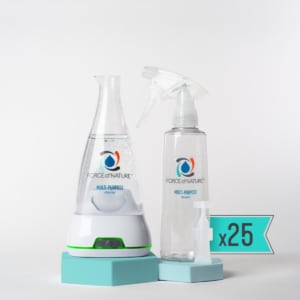
Force of Nature is a small appliance that turns tap water plus a capsule of salt, water, and vinegar into a multi-purpose cleaner, deodorizer, and EPA-registered disinfectant.
It does not contain quats or added fragrance.
And it kills 99.9% of germs.
So instead of relying on harsher disinfectants, you have a simpler option that still gets the job done.
Learn More
If you’re trying to better understand what’s actually in your cleaning products, start with the Cleaning Product Ingredient Glossary. You may also want to dig deeper into What Does “Fragrance” Really Mean in Cleaning Products?, since “fragrance” can be more complicated than it sounds. If you’re concerned about what conventional products may mean for your home and family, Cleaning Product Health Risks: What you need to know breaks down the bigger picture. And for a practical guide to what to skip, explore the Top Ingredients to Avoid In Cleaning Products for a Safer Home.