Vinegar has been a go-to household cleaner for generations, and honestly, we get it. It’s inexpensive, easy to find, and useful for plenty of everyday messes. But when it comes to disinfecting — actually killing germs on surfaces — vinegar has some important limits.
The short answer: vinegar can help clean some messes, but vinegar does not disinfect or sanitize. If your goal is to kill germs that can make your family sick, you’ll want to use an EPA-registered disinfectant instead.
Cleaning vs. Disinfecting: Why the Difference Matters
Cleaning and disinfecting are not the same thing. Cleaning helps remove sticky messes, smudges, and visible dirt. Disinfecting goes further: it means a product is registered with the EPA as a disinfectant and has met EPA’s germ-kill requirements on hard, non-porous surfaces.
That difference matters because a surface can look clean without being disinfected. Vinegar may help wipe away some grime, but it is not an EPA-registered disinfectant and should not be relied on to kill 99.9% of germs.
For a deeper breakdown, read our guide to cleaning vs. disinfecting vs. sanitizing.
Does Vinegar Disinfect?
No, vinegar does not disinfect. Even undiluted vinegar does not kill viruses sufficiently to qualify as an EPA-registered disinfectant, and it does not reliably kill dangerous bacteria like Staph and MRSA.
Once vinegar is diluted as part of a DIY cleaning solution, you reduce its germ-killing power even further. That’s why vinegar is not the right choice when your goal is to disinfect high-touch surfaces, clean up after handling raw meat or eggs, or reduce the spread of germs during cold, flu, or stomach bug season.
Does Vinegar Sanitize?
No, vinegar does not sanitize in the way EPA-registered sanitizers are required to. Sanitizing means reducing bacteria to levels considered safe by public health standards, and sanitizers must meet specific regulatory requirements.
Vinegar can be helpful for some cleaning jobs, but it is not registered by the EPA as a sanitizer or disinfectant for household surfaces.
Does Vinegar Kill Germs?
Vinegar may have some antimicrobial activity in certain situations, but it does not kill germs to the level required for disinfecting. To be a disinfectant, a product must be able to kill 99.9% of specific germs on hard, non-porous surfaces within a specified contact time and be registered with the EPA.
So if you’re dealing with everyday smudges, vinegar may be useful. But if someone in your home is sick, if you’re cleaning high-touch surfaces, or if you’re trying to reduce exposure to germs like Staph, MRSA, cold viruses, flu viruses, foodborne bacteria like Salmonella, or stomach bugs, vinegar is not enough.
Does Vinegar Kill Viruses?
Vinegar is not powerful enough to reliably kill viruses at disinfecting standards. That includes common household concerns like cold and flu viruses, stomach bugs, and other germs that can spread quickly through high-touch surfaces.
Because vinegar is not an EPA-registered disinfectant, it is not the product to rely on when disinfecting really matters — like after illness, around shared or food-prep surfaces, or during peak germ season.
When Vinegar Works Well for Cleaning
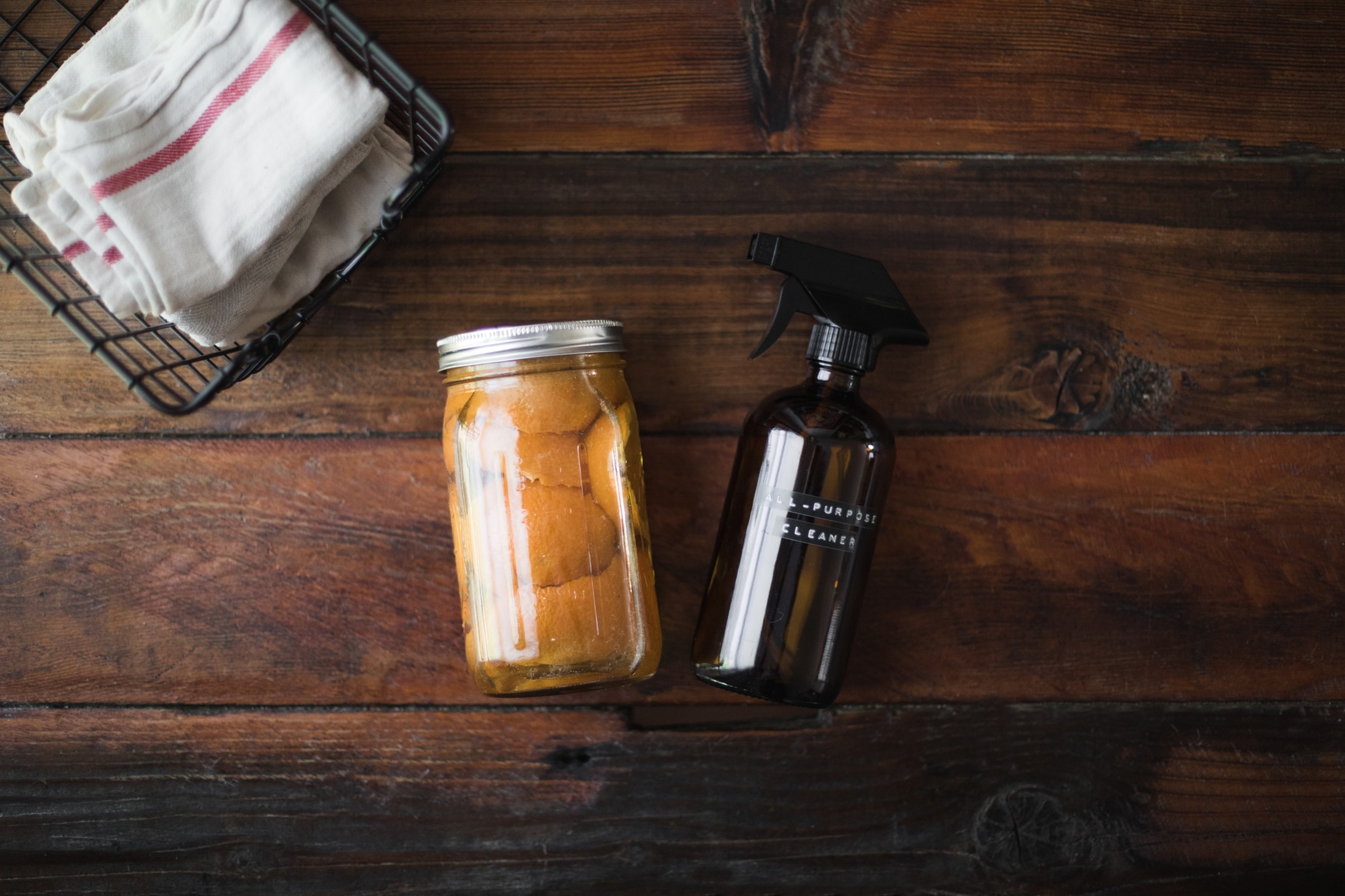
Vinegar can still be a useful cleaner for certain jobs. It can help with some mineral deposits, water spots, soap scum, and greasy messes when used on vinegar-safe surfaces.
The key is matching vinegar to the right job. Vinegar can be helpful when your goal is to clean, but not when your goal is to disinfect.
And while vinegar can still be helpful for some cleaning jobs, it’s also important to know where vinegar can damage surfaces, when concentrations matter, and what not to mix it with. Here’s what to know about cleaning safely with vinegar.
The Punchline: Clean or Disinfect?
The punchline: think about whether your goal is to clean something — like wiping away sticky messes, smudges, or visible dirt — or disinfect. You can rely on vinegar for some cleaning jobs, but because vinegar does not disinfect or sanitize, you can’t count on vinegar to kill 99.9% of germs.
A Better Option When You Need to Kill Germs
While vinegar on its own isn’t up to the challenge, when combined correctly with other ingredients, it can become part of a powerful cleaning and disinfecting solution.
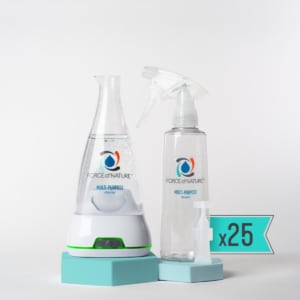
At Force of Nature, we use a small appliance that combines vinegar in the right concentration with salt and water, then uses electricity to convert the solution into a powerful cleaner and EPA-registered disinfectant. Force of Nature kills 99.9% of germs when used as directed, making it a much more effective alternative to vinegar when you need to clean and disinfect without harmful fumes or residues.
Force of Nature is powered by hypochlorous acid, the active disinfecting ingredient made by the appliance. Learn more about what hypochlorous acid is and how electrolyzed water works.
The Bottom Line
Vinegar has a real place in household cleaning, but it is not a disinfectant. Use it when you’re cleaning certain messes on vinegar-safe surfaces, but don’t rely on vinegar when your goal is to kill germs.
When disinfecting matters, choose an EPA-registered disinfectant and follow the label directions so you know you’re using it correctly.