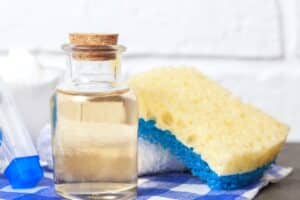
Vinegar is one of those wonder substances that seems to have endless uses. What else can handle everything from salad dressings and meringues to cleaning dog ears and deterring ants? Pretty impressive. A lot of people also love using vinegar for household cleaning because it can feel like a safer alternative to many conventional cleaning products. It skips added dyes, preservatives, surfactants, and fragrances that some families prefer to avoid around curious kids and pets. But while vinegar can absolutely earn a place in your cleaning routine, it also has some important limitations. Knowing where vinegar works well — and where it falls short — can help you use it more effectively and more safely.
Is Vinegar Safe for Cleaning?
In many cleaning situations, vinegar can be useful. It can help remove some mineral deposits, soap scum, smudges, and certain sticky messes. But “safe” depends on how you’re using it, what concentration you’re using, and what surface you’re cleaning.
Vinegar contains acetic acid, which is what gives it its cleaning power. But that acidity is also why vinegar can damage certain surfaces, irritate eyes or skin in higher concentrations, and cause problems if it’s used around the wrong materials.
Vinegar Can Clean, But It Does Not Disinfect
One of the biggest things to understand is the difference between cleaning and disinfecting. Cleaning helps remove sticky messes, smudges, and visible dirt. Disinfecting means a product is registered with the EPA as a disinfectant and has met EPA germ-kill requirements on hard, non-porous surfaces.
Vinegar can help clean some messes, but vinegar is not an EPA-registered disinfectant. Even undiluted vinegar does not kill viruses sufficiently to qualify as an EPA-registered disinfectant, and it does not reliably kill dangerous bacteria like Staph and MRSA.
The punchline: think about whether your goal is to clean or disinfect. If you’re wiping away visible dirt, smudges, or sticky messes, vinegar can be useful. But if your goal is to kill 99.9% of germs, vinegar isn’t enough on its own.
If you’re wondering whether vinegar actually disinfects, sanitizes, or kills viruses and bacteria, read our full guide to what vinegar can and can’t do.
For a deeper breakdown of the difference between cleaning and disinfecting, read our guide to cleaning vs. disinfecting vs. sanitizing.
Watch the Concentration
In order for vinegar to have a high enough acetic acid concentration to be effective at cleaning, it can also become more irritating or caustic. That’s why it’s important to consider the concentration of vinegar when creating and using DIY cleaning products that contain vinegar.
High concentrations of acetic acid can cause damage to eye tissue or burns to the esophagus and stomach if ingested, so be careful keeping DIY vinegar solutions around children and pets.
Surfaces You Should Not Clean With Vinegar
Because vinegar is acidic, it can damage some surfaces over time. You should avoid using vinegar on natural stone surfaces like marble, granite, limestone, onyx, and travertine because it can dull or etch the surface.
You should also be cautious with vinegar on wood floors, especially if they are unsealed or have a delicate finish. The acidity can wear down finishes or leave surfaces looking dull over time.
Surfaces That May Need Rinsing After Vinegar
Because vinegar can be corrosive, you need to rinse your homemade vinegar cleaner off some surfaces after using it. This is especially true for rubber gaskets, like the ones in dishwashers and laundry machines, window seals, and unsealed grout.
Skipping the rinse may not cause visible damage right away, but repeated use over time can contribute to wear, cracking, or corrosion.
Be Careful Using Vinegar Around Plants
Because vinegar is very acidic, it can cause plants to grow more slowly or even kill them if it’s used on or near them. If you’re cleaning around houseplants, garden herbs, or fresh flowers, be careful where you spray and wipe.
What Should You Never Mix With Vinegar?
Never mix vinegar with bleach. Mixing vinegar and bleach can create chlorine gas, which can irritate the eyes, throat, and lungs.
You should also avoid mixing vinegar with hydrogen peroxide in the same container. Together, they can form peracetic acid, which can be irritating and unsafe to handle in a DIY cleaning mixture.
And while baking soda and vinegar are often paired in DIY cleaning tips, they mostly neutralize each other when mixed together. The fizz can help loosen some debris, but the mixture itself is not a disinfectant.
Where Vinegar Works Well
Vinegar can still be helpful for certain cleaning jobs. It can be a good option for some mineral deposits, water spots, or breaking down grease when used on vinegar-safe surfaces.
The key is using vinegar where it performs best — and not expecting it to do jobs it was never designed or registered to do, like disinfecting high-touch surfaces or surfaces susceptible to foodborne bacteria or viruses.
A Better Option When You Need to Clean and Disinfect
While vinegar on its own isn’t up to the challenge of disinfecting, when combined correctly with other ingredients, it can become part of a powerful cleaning and disinfecting solution.
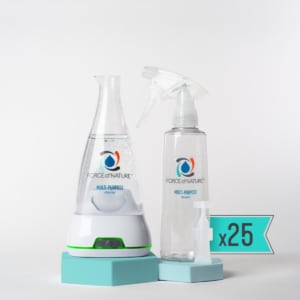
Force of Nature uses a small appliance to combine vinegar in the right concentration with salt and water, then electricity converts that solution into a cleaner and EPA-registered disinfectant. Force of Nature kills 99.9% of germs when used as directed, making it a more effective option when you need to clean and disinfect without harmful fumes or residues.
It’s powered by hypochlorous acid, the active disinfecting ingredient made by Force of Nature. You can learn more about what hypochlorous acid is and how electrolyzed water works.
The Bottom Line
Vinegar can be a helpful household cleaner when you use it on the right surfaces and for the right kinds of messes. But it has real limits. It can damage certain materials, needs careful handling in higher concentrations, should not be mixed with certain ingredients, and does not disinfect.
If your goal is to wipe away smudges or mineral buildup, vinegar may be just fine. But if your goal is to kill germs, choose an EPA-registered disinfectant that’s proven to do the job.