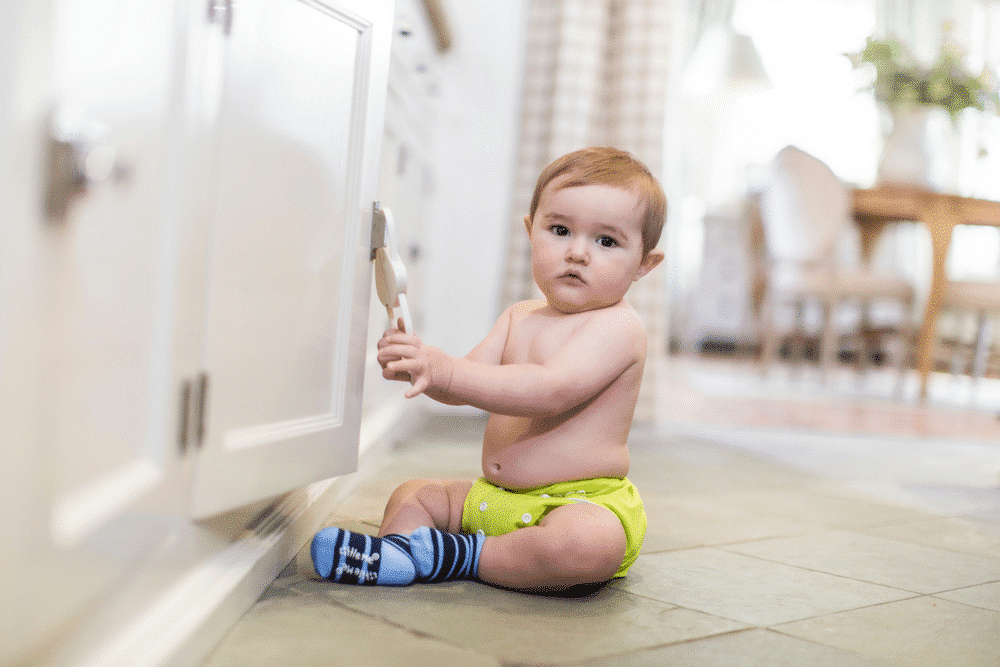
When you’ve got babies crawling on the floor, toys going straight into little mouths, and sticky hands touching everything, cleaning suddenly feels different.
It’s not just about getting surfaces clean—it’s about making sure what’s left behind is actually safe.
In this guide, we’ll break down what to look for in the safest cleaning products for kids, babies, and sensitive families, what to avoid, and how to clean your home confidently without worrying about harmful residues, fumes, or hidden ingredients.
What Makes a Cleaning Product Safer to Use Around Kids?
Cleaning around kids isn’t just about getting rid of dirt and sticky messes. It’s also about what your child may come into contact with after you clean.
A cleaning product that’s safer to use around kids should:
- Avoid fragrance and dyes, especially if your child has asthma, allergies, eczema, or sensitive skin
- Minimize harsh fumes and irritating residues
- Be appropriate for frequent use on the surfaces kids touch every day
- Be safe to use on high-touch areas like toys, floors, high chairs, and feeding surfaces with no rinsing required
- Be clear about what’s in the formula
- Have testing or credible third-party evidence behind its safety claims
Learn more about cleaning product health risks and how to reduce them at home. If you’re specifically looking for bleach-free disinfecting options for bigger germ situations, see Best Bleach Alternatives for Disinfecting: What Actually Works?
Best Cleaning Products for Homes with Kids
The safest cleaning products for homes with kids are the ones that clean effectively without adding unnecessary exposure to fumes, residues, or irritating ingredients.
For messes like sticky counters, high chairs, bathroom surfaces, floors, and toys—you want a cleaner that’s designed for frequent use on the surfaces your family touches most.
Look for products that are:
- Fragrance-free
- Dye-free
- Free from quaternary ammonium compounds (quats)
- Free from bleach and ammonia
- Free from preservatives like methylisothiazolinone and methylchloroisothiazolinone
- Appropriate for the surface you’re cleaning
- Clear about whether rinsing is required
The goal isn’t to make cleaning complicated. It’s to choose products you can use again and again without wondering what’s lingering on the surfaces your kids touch every day.
If you’re looking for broader guidance beyond kid-specific cleaning, our guide to the best non-toxic cleaning products breaks down what to look for in safer, effective cleaners for the whole home.
For help choosing a disinfectant that’s effective enough to kill germs and safe enough for regular family use, see how to choose a non-toxic disinfectant that actually works.
Safe Cleaning vs. Safe Disinfecting: What’s the Difference?
Cleaning and disinfecting are not the same thing.
Cleaning removes dirt, crumbs, grease, and sticky messes from surfaces. Disinfecting uses an EPA-registered product to kill 99.9% of a specific set of germs on hard, non-porous surfaces when used as directed.
For greasy, grimy messes, cleaning can be enough. Disinfecting is important when someone is sick, after handling raw meat or eggs, or on high-touch surfaces during cold, flu, or stomach bug season.
The key is choosing products that fit the job. A safer cleaner should be gentle enough for frequent use. A safer disinfectant should be both effective against germs and made without the harsh fumes or residues you’re trying to avoid around kids.
Ingredients to Avoid Around Babies and Kids
Some common cleaning ingredients can be more irritating or problematic, especially for kids with sensitive skin, allergies, asthma, or eczema.
Fragrance or “Parfum”
Fragrance isn’t a single ingredient—it’s a mixture of many chemicals, and companies aren’t required to disclose what’s included.
Some fragrances may contain phthalates, which are used to help scents last longer but have been linked to hormone disruption.
Learn more about what fragrance really means in cleaning products.
Preservatives Like Methylisothiazolinone and Methylchloroisothiazolinone
These preservatives are used to prevent bacteria growth in products, but they’ve been linked to allergic reactions and sensitivity, especially with repeated exposure.
Learn more in this methylisothiazolinone safety overview and what to know about methylchloroisothiazolinone in cleaning products.
Disinfectants Like Quats, Thymol and Bleach
Some disinfecting ingredients—like quaternary ammonium compounds (quats), thymol, and bleach—are effective at killing germs but can also be irritating, especially for people with asthma, allergies, or sensitive skin.
They may contribute to respiratory irritation or trigger sensitivities with repeated use, particularly in enclosed indoor spaces.
Dyes
Dyes don’t add cleaning power, but they’re often included to make products look more appealing. They can cause irritation or sensitivity, especially for kids with sensitive skin.
For a deeper breakdown, see Top Ingredients To Avoid In Cleaning Products For A Safer Home.
Where It Matters Most: High-Touch Surfaces
If you’re trying to reduce exposure, focus first on the areas kids come into contact with most often:
- Toys and teethers
- High chairs and feeding surfaces
- Floors, especially for crawling babies
- Bathroom surfaces
- Doorknobs, light switches, and frequently touched items
These are the places where residues and repeated exposure matter the most.
For more guidance on toy-specific cleaning, see Chemical-Free Cleaning Products for Baby Toys: What’s Actually Safe?.
The Problem with “Natural” and “Baby-Safe” Labels
Labels like “natural,” “clean,” “green,” and “baby-safe” sound reassuring, but they’re not always reliable indicators of safety.
Because these terms aren’t regulated, products can still contain ingredients you might want to avoid.
That’s why the safest cleaning products for kids are usually the ones that make it easy to understand what’s inside, how the product should be used, and whether it needs to be rinsed after use.
If you want to better understand how to evaluate labels, see Natural Cleaning Products: What to Look For and What to Avoid.
What Makes an All-Purpose Cleaner Safer for Homes with Kids?
A truly safer all-purpose cleaner should do more than sound “natural.” It should work well on daily messes while avoiding the ingredients families are often trying to get away from.
For homes with kids, babies, pets, asthma, allergies, or sensitive skin, look for an all-purpose cleaner that:
- Can be used on the high-touch surfaces you clean most
- Doesn’t leave behind harsh residues
- Doesn’t release strong fumes
- Is made without added fragrance, dyes, quats, bleach, ammonia, or harsh preservatives
- Can clean messes and disinfect germy surfaces
This is especially helpful if you’re trying to simplify your routine. Instead of keeping a different product for every surface, one safer multi-purpose option can make it easier to clean consistently without second-guessing every spray.
A Safer Way to Clean Surfaces Kids Touch Every Day
For many families, the goal is finding something that’s both effective and safe enough for daily use.
One option is hypochlorous acid, a disinfecting ingredient that’s gentle enough for wound healing and veterinary care products. It’s such an effective antimicrobial that it’s also EPA registered for disinfecting hospitals.
It can clean, deodorize, and disinfect without the harsh fumes or residues associated with traditional cleaners.
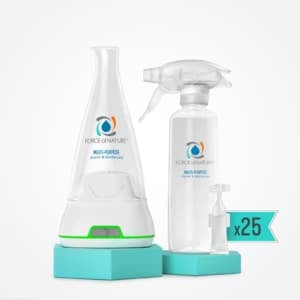
Force of Nature creates hypochlorous acid at home on your countertop.
If you’re curious about the science—but not in the mood for a chemistry lecture—our guide to what hypochlorous acid is explains why HOCl works so well, and our guide to how electrolyzed water works shows how Force of Nature makes it fresh on your countertop.
The Bottom Line
Choosing the safest cleaning products for kids, babies, and sensitive families isn’t about finding a perfect label—it’s about understanding what’s inside, how it’s used, and what gets left behind.
Once you know what to look for and what to avoid, it becomes much easier to choose products that are both effective and safe for your family.